Precision-engineered systems engineered to satisfy Irish National Standards Authority (NSAI) regulations and European building codes.
The Irish construction sector is undergoing a profound structural transformation driven by government initiatives such as Housing for All, Project Ireland 2040, and stringent Nearly Zero Energy Building (NZEB) mandates. To meet national targets of delivering over 33,000 residential units annually alongside massive commercial and infrastructure upgrades in Dublin, Cork, Galway, and Limerick, Irish concrete block manufacturers and quarry operators face unprecedented demand for high-output, reliable, and energy-efficient brick making equipment.
In Ireland, concrete blocks, structural bricks, and thermal walling components are governed strictly by the National Standards Authority of Ireland (NSAI) under I.S. EN 771-3 (Aggregate Concrete Masonry Units) and I.S. EN 771-4 (Autoclaved Aerated Concrete Masonry Units). Irish building contractors and developers insist on precise dimensional tolerances (Category D1/D2), certified compressive strengths (ranging from 7.5 N/mm² standard solid blocks to 13.5 N/mm² high-strength load-bearing units), and guaranteed freeze-thaw resistance tailored to Ireland's Atlantic maritime climate.
Furthermore, with the implementation of the Irish Climate Action Plan, embodied carbon within building materials is scrutinised heavily. Modern Irish quarry owners and brick factories are replacing aging, power-hungry vibro-moulding machinery with high-density hydraulic servo-driven brick production lines capable of incorporating secondary aggregates, ground granulated blast-furnace slag (GGBS), pulverized fuel ash (PFA), and recycled crushed aggregates without compromising structural integrity.
Achieving profitable operation in Ireland’s industrial landscape requires brick machinery designed for minimal downtime, high automated throughput, and strict raw material efficiency. Below is an engineering overview comparing legacy vibration technology against modern electro-hydraulic servo brick production lines.
| Technical Parameter | Legacy Vibro-Press Machinery | Modern Servo-Hydraulic Production Line (China 4.0 Standard) | Direct Advantage for Irish Operators |
|---|---|---|---|
| Vibration & Compaction Technology | Single-frequency mechanical eccentric shaft motors (50Hz constant) | Dual-servo variable frequency dynamic vibration (0–110Hz dynamic tuning) | 30% higher aggregate compaction density, achieving 10N/mm²+ rating effortlessly. |
| Energy Consumption per 1k Blocks | 18.5 – 22.0 kWh / ton of cured product | 11.2 – 14.0 kWh / ton (Electro-Hydraulic Energy Recovery) | Reduces operational electricity bills under Irish industrial energy tariffs. |
| Dimensional Precision (EN 771-3) | ± 2.5 mm variance across block height | ± 0.8 mm ultra-tight tolerance (Laser guided height control) | Eliminates site rejections by Irish structural engineers and QS auditors. |
| Cement Content Requirement | High OPC ratio (9.5% - 11.0%) to compensate for lower density | Optimized OPC ratio (6.5% - 8.0%) with supplementary cementitious materials | Substantial savings on raw cement costs; supports low-carbon binder formulas. |
| PLC Automation & Remote Maintenance | Basic relay logic or offline PLC panel | Siemens S7-1500 PLC with SCADA, IoT Edge cloud gateway & remote diagnostics | Enables real-time monitoring from Dublin/Cork with 24/7 technical oversight. |
The cornerstone of modern concrete brick and paving machine engineering lies in the synchronous control of force and amplitude. Traditional block machines generate uniform vibration throughout the feeding and compaction cycle, leading to micro-segregation of coarse aggregate and fine sand. In contrast, advanced Chinese brick making machines designed for export to Northern European markets utilize high-response servo motors connected directly to dual vibration shafts.
During the aggregate feeding phase, low-amplitude, high-frequency excitation breaks surface tension, allowing dense material distribution into multi-cavity moulds. Upon head-tamper engagement, the system dynamically ramps up to high-amplitude compaction force (up to 120 kN). This ensures uniform structural density throughout standard Irish 440mm x 215mm x 100mm solid, hollow, and thermal soap bar blocks.
Setting up a profitable brick manufacturing plant in Ireland requires more than buying standalone machinery. It requires complete system integration from raw material batching to automated finger-car curing racks and robotic packaging lines.
Precise planetary pan mixers equipped with moisture sensors measure moisture content in real-time, automatically adjusting added water to compensate for Ireland's wet sand aggregates.
Heavy-duty hydraulic presses integrated with fully automated finger-car systems transfer green blocks into temperature and humidity-controlled steam curing chambers for rapid strength development.
High-speed 4-axis servo cubing robots stack cured blocks onto wooden or plastic pallets, followed by automatic vertical stretch wrapping tailored for Irish transport weather conditions.
Why are leading Irish construction firms and building material manufacturers turning to Chinese heavy machinery leaders like Amulite Group for their capital expansion projects?
Our production plants in China feature gantry CNC machining centers, robotized plasma welding cells, and large-scale stress-relief annealing furnaces. Frame structures of our brick presses are built from heavy structural steel plates subjected to shot-blasting, ensuring zero structural deformation even after tens of millions of press cycles under maximum load.
To ensure seamless maintenance and spare parts replacement in Ireland, our export-grade machines incorporate top-tier international standard components:
While European equipment OEMs often quoted delivery timelines exceeding 12 to 18 months, our vertically integrated supply chain enables complete manufacturing, pre-assembly, dry-run testing, and factory acceptance testing (FAT) within 90 to 120 days.
Investing in a China-manufactured automated brick production line allows Irish buyers to reduce initial capital expenditure (CAPEX) by 35% to 50% compared to Western European alternatives without compromising on engineering quality, mechanical longevity, or finished product standards.
Importing heavy industrial machinery into Ireland requires absolute confidence in safety compliance, electrical certification, site installation supervision, and ongoing operational support.
All brick making machines, cutting systems, and secondary processing lines supplied to Ireland carry full CE Marking. Electrical control cabinets comply strictly with EN 60204-1 safety standards, featuring dual-channel emergency stop safety relays, perimeter light-curtain fencing, and interlocked machine guards to pass HSA (Health and Safety Authority Ireland) workplace inspections seamlessly.
We provide complete end-to-end commissioning support. Senior mechanical engineers and PLC software specialists are dispatched to your site in Ireland to supervise civil foundation verification, equipment alignment, electrical wiring integration, raw material formulation tuning, and local workforce training until stable daily mass production is achieved.
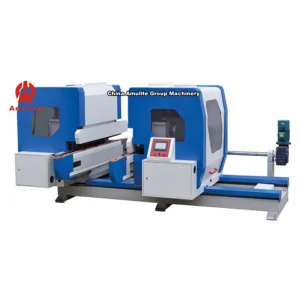
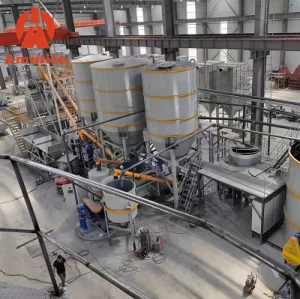
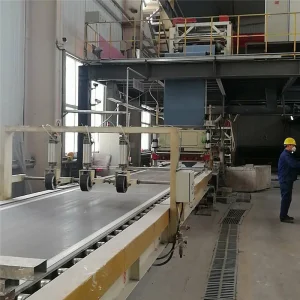
Explore our complete range of specialized equipment designed for manufacturing modern construction blocks, lightweight wall panels, and high-performance building boards.
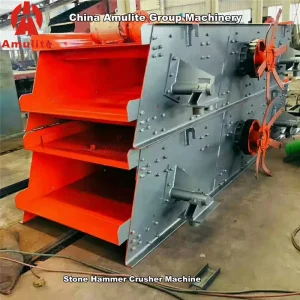
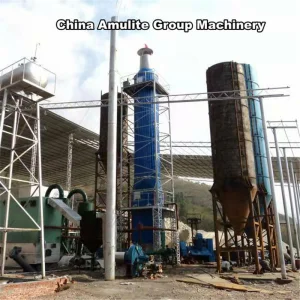
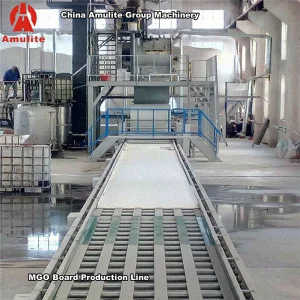
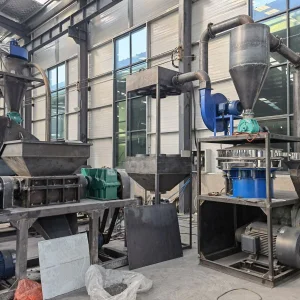
Detailed technical, financial, and logistical answers curated by our engineering growth specialists to facilitate your capital investment decision.
Our concrete brick and block production lines are equipped with ultra-precise electro-hydraulic servo vibration controls and height sensors. This guarantees that finished dense concrete blocks meet dimensional Category D1/D2, micro-structural density targets, and compressive strengths ranging from 7.5N/mm² to 20N/mm², fully aligning with NSAI (National Standards Authority of Ireland) and European Eurocode requirements.
Yes. Our plant configurations feature customized planetary pan mixers and aggregate batchers designed to handle crushed Irish limestone, washed pit sand, recycled concrete aggregate (RCA), as well as supplementary cementitious materials such as GGBS (Ground Granulated Blast-furnace Slag) and PFA (Pulverized Fuel Ash) to reduce cement reliance and embodied carbon.
Equipment manufacturing, custom mold machining, and dry-run pre-assembly at our factory take approximately 60 to 90 days. Shipping via ocean freight to Irish ports (such as Dublin Port, Port of Cork, or Shannon Foynes) takes around 30 to 35 days. Site foundation checks, mechanical assembly, wiring, and commissioning by our resident field engineers usually take 30 days.
All machinery built for the Irish market features standard 400V 50Hz 3-Phase electrical architecture. Control cabinets carry full CE certification according to EN 60204-1 directives, incorporating Siemens S7 PLCs, Schneider contactors, and dual-channel safety relays to ensure safety for Irish factory technicians.
We maintain an inventory of wearing parts (mould liners, hydraulic seals, proximity switches) and provide direct 24/7 telemetry support through Siemens IoT Edge gateways. In the event of software or operational queries, our engineering team connects remotely to diagnose and resolve parameters in real-time. Fast-tracked spare parts are dispatched via DHL/FedEx directly to your site in Ireland.
By swapping quick-change heavy alloy steel moulds (which takes less than 30 minutes with our hydraulic mold-clamping system), a single machine can manufacture standard Irish 440x215x100mm solid blocks, cavity/hollow blocks, soap bars, brick pavers, retaining wall units, and kerb stones.
Contact our engineering consultants today to receive a full turnkey equipment proposal, complete ROI calculations, electrical layout diagrams, and raw material formulation advice tailored to your site in Ireland.
Send Inquiry Now