Advanced engineering systems designed for seamless integration into modern manufacturing plants in Larnaca and across the Euro-Mediterranean industrial hub.
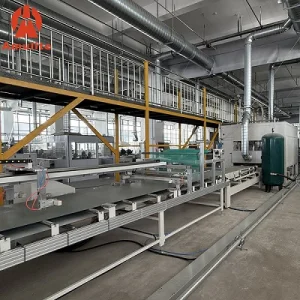
Larnaca Turnkey Flexible Clay Ceramic Tile Production Line
Best Flexible Clay Ceramic Tile Production Line Manufacturer, Companies
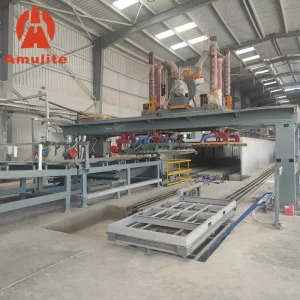
High-Speed Non-Asbestos Corrugated Roof Sheet System
China Non-Asbestos/Asbestos Cement Corrugated Roof Sheets Production Line Company, Product
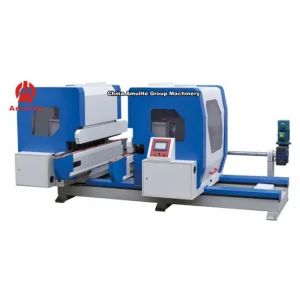
Heavy-Duty AM806BH-10 Continuous Forming Unit
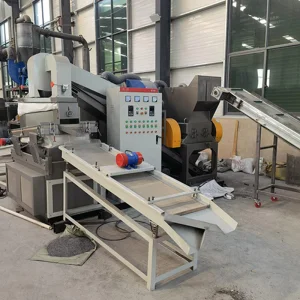
Commercial Copper Cable Granulator & Recycling Plant
Larnaca, positioned on the southern coast of Cyprus, serves as a vital maritime and aviation logistics gateway connecting Europe, the Middle East, and North Africa. The city is currently experiencing an unprecedented economic expansion, spearheaded by the multi-billion-euro redevelopment of the Larnaca Port and Marina, alongside extensive coastal tourism developments extending toward Dhekelia and Mackenzie Beach. As high-density luxury residential complexes, premium hospitality projects, and civic infrastructure surge, the demand for high-performance architectural envelope materials has escalated drastically.
However, Cyprus faces distinct regional building challenges. As an island economy with significant seismic vulnerability (Zone 3/4 under Eurocode 8 provisions), structural engineers in Larnaca must rigorously regulate dead load limits on high-rise facades. Traditional exterior cladding systems—such as heavy granite panels, sintered thick ceramic slabs, and standard masonry veneers—pose severe safety hazards during dynamic earth movements and impose enormous structural reinforcement costs. Furthermore, the extreme coastal microclimate of Larnaca subjects exterior surfaces to high relative humidity, relentless salt-spray aerosol deposition, severe UV solar degradation, and rapid thermal cycling exceeding 45°C in peak summer months. These harsh environmental stressors routinely cause adhesive delamination, alkali-silica efflorescence, and freeze-thaw spalling in conventional ceramic installations.
Investing in a localized Flexible Clay Ceramic Tile Production Line in Larnaca offers a transformative industrial solution. Modified Clay Material (MCM) products combine the aesthetic richness of natural stone, terracotta, and split rock with an ultra-low aerial mass (averaging 3.5 to 5.5 kg/m²). Localized manufacturing eliminates the prohibitive sea freight expenses and containerized breakage rates associated with importing bulky ceramic tiles from Italy, Spain, or mainland Greece. By leveraging raw mineral powders, unbaked modified clays, and natural pigments within an automated continuous traction-forming infrastructure, Larnaca-based factories can capture massive market share across the Republic of Cyprus and establish lucrative export corridors across the Eastern Mediterranean basin.
Situated within 15 minutes of Larnaca International Airport and the deep-water Larnaca Port facilities, industrial plants enjoy rapid consolidation of bulk inorganic raw materials (clays, silica, mineral polymers) and friction-free maritime container distribution to Israel, Egypt, Lebanon, and Greece.
MCM tiles maintain superior shear elasticity and crack bridging capabilities, fully complying with Eurocode 8 seismic demands. Their zero-efflorescence, breathable micro-pore formulation provides complete resistance to coastal marine saline aerosol erosion.
The global architectural cladding sector is facing profound regulatory disruption. Under the European Green Deal, the EU Energy Performance of Buildings Directive (EPBD), and global net-zero commitments, building materials are subjected to rigorous Life Cycle Assessment (LCA) parameters and strict Embodied Carbon caps. Conventional ceramic tile production represents one of the most energy-intensive heavy industries in existence, relying on massive roller kilns fired with liquefied natural gas (LNG) at temperatures ranging from 1,150°C to 1,280°C. This fossil-fuel combustion emits upwards of 18 to 26 kg of carbon dioxide equivalent per square meter of finished tile, rendering conventional ceramics increasingly vulnerable to EU Carbon Border Adjustment Mechanism (CBAM) tariffs and escalating energy surcharges.
In contrast, the Flexible Clay Ceramic Tile (Modified Clay Material - MCM) technological process represents a fundamental green engineering breakthrough. Rather than sintering minerals at four-figure temperatures, MCM production lines utilize low-temperature composite polymer-mineral cross-linking technology. Natural clay, inorganic colored sand, and tailored active polymer modulators undergo microscopic photochemical cross-linking in specialized infrared and convective drying chambers at low processing temperatures (65°C to 85°C). The total energy consumption drops by over 80%, yielding a finished architectural skin with an embodied carbon footprint of less than 3.5 kg CO2e/m²—a monumental 75-85% reduction compared to traditional sintered tiles.
Globally, the market for flexible ceramic tiles is projected to expand at a compound annual growth rate (CAGR) of over 14.6% through 2032. International property developers, architectural specifiers, and REIT asset managers are aggressively adopting MCM panels to secure prestigious LEED Platinum, BREEAM Outstanding, and DGNB certifications for major developments in major commercial corridors.
| Performance / Industrial Metric | Conventional Sintered Ceramic | Amulite MCM Flexible Tile Line | Impact on Larnaca Asset Operations |
|---|---|---|---|
| Thermal Processing Temp. | 1,150°C – 1,280°C (Gas Kiln) | 65°C – 85°C (Infrared / Electric) | Direct insulation from volatile Mediterranean fuel costs |
| Aerial Weight Density | 20 – 35 kg/m² | 3.5 – 5.5 kg/m² | Zero structural reinforcement; rapid facade installation |
| Embodied Carbon (LCA) | 18 – 26 kg CO₂e/m² | 2.8 – 3.8 kg CO₂e/m² | Immediate compliance with EU EPBD carbon benchmarks |
| Bending & Curvature Radius | Rigid / Zero Flex (Brittle) | Down to R = 200 mm | Wraps circular columns, arches & curved balconies |
| Seismic Adhesion Safety | High risk of shear fracture | Polymer-modified elastic adhesion | Eliminates falling tile hazards during seismic tremors |
Deploying a flexible clay tile manufacturing plant requires unmatched precision across continuous batching, precision slurry deposition, tensile mesh feeding, microwave-assisted surface texturing, and multi-stage temperature profiling. China Amulite Group brings more than 15 years of world-class machinery manufacturing expertise, operating an expansive 100,000 m² heavy-machinery manufacturing base equipped with multi-axis CNC milling centers, automatic submerged arc welding lines, and rigorous pre-shipment dry-run simulation protocols.
While European machinery builders demand exorbitant CAPEX costs accompanied by lead times extending well past 18 months, Amulite Group delivers turnkey, fully automated MCM production lines characterized by extreme cost-to-capacity efficiency. Our integrated engineering architecture features industrial-grade Siemens S7-1500 PLC centralized architectures, high-precision Schneider variable frequency drives, and precision optical sensors that control board thickness tolerances down to ±0.15 mm across continuous rolls up to 1,200 mm in width.
Furthermore, Amulite Group solves the most difficult problem confronting new plant operators: the raw material chemical formulation. We do not simply ship crates of steel; our resident process engineers conduct comprehensive laboratory testing on local soils, clays, and limestone sands native to Cyprus. We formulate custom chemical compounding recipes—incorporating eco-friendly modifiers, cross-linking emulsifiers, and water-repellent silanes—ensuring our clients achieve commercial-grade tensile strength, water impermeability, and EN 13501-1 Class A2 fire compliance from the very first production batch.
Factory lines are fully pre-assembled, wired, and dry-tested in Hebei prior to containerization. Resident engineering crews execute physical assembly, utility connection, and trial runs on site in Larnaca within 30 to 45 days of port arrival.
Every line incorporates secure 5G-ready cloud communication modules. Amulite’s centralized automation control engineers provide 24/7 real-time diagnostic support, PLC code upgrades, and preventative maintenance alerting.