Heavy-duty, precision-engineered manufacturing equipment optimized for high ambient temperature resilience, local raw material inputs, and continuous industrial output in India.
How national initiatives, urbanization, and sustainable building codes are accelerating the demand for premium accessories equipment and heavy industrial lines across South Asia.
India’s industrial sector is undergoing a monumental structural shift. Driven by government-backed master plans such as the National Infrastructure Pipeline (NIP), PM Gati Shakti, and the Production Linked Incentive (PLI) Scheme, domestic manufacturing capabilities are scaling at an unprecedented rate. Central to this expansion is the urgent need for high-throughput, low-downtime industrial accessories equipment and specialized production lines. From Maharashtra and Gujarat’s heavy engineering hubs to the fast-growing industrial corridors of Tamil Nadu, Karnataka, and Telangana, plant operators are moving beyond legacy machinery toward automated, high-precision manufacturing plants.
Urbanization in Tier-2 and Tier-3 Indian cities has sparked a surge in lightweight structural materials, non-asbestos fiber cement claddings, and energy-efficient AAC (Autoclaved Aerated Concrete) block installations. Traditional brickworks are being systematically phased out due to stringent environmental regulations enforced by the Central Pollution Control Board (CPCB). Consequently, modern factories require turnkey production machinery, heavy crushing units, specialized edge-trimming systems, and automated packaging lines optimized specifically for the region's operational conditions.
Standard international machinery often fails in South Asia due to extreme thermal variations, power quality fluctuations, and regional raw material discrepancies. Here is how advanced equipment suppliers address these operational challenges.
Indian industrial environments experience ambient temperatures exceeding 45°C coupled with monsoon humidity. Superior equipment designs incorporate heavy-duty industrial oil coolers, IP65/IP66 rated electrical enclosures, and high-temperature synthetic lubricant circulation systems to prevent hydraulic fluid breakdown and premature seal degradation.
Power grid instabilities, frequency drops, and sudden voltage surges can damage sensitive PLC controllers and VFD drives. Our equipment specifications serving India utilize heavy-duty isolation transformers, redundant line filters, and Siemens/Schneider control units engineered to tolerate wide voltage inputs (+/- 15%).
The chemical composition of Indian raw materials—such as high-silica sand, variable-grade thermal power station fly ash, and local OPC/PPC cement grades—demands flexible slurry mixing, customizable hydration timing, and robust mechanical crushing profiles built directly into the plant accessories.
Evaluating total cost of ownership (TCO), spare parts availability, and engineering support mechanisms when importing industrial equipment into Indian manufacturing zones.
When enterprise buyers and Indian manufacturing groups source accessories and capital equipment from global suppliers, purchase decisions extend far beyond upfront capital expenditure (CAPEX). Achieving a low Total Cost of Ownership requires evaluating operational expenditure (OPEX), machine uptime SLAs, component standardized availability, and international freight logistics.
Ensuring your machinery outputs conform to national building codes, fire ratings, and environmental mandates across all Indian states.
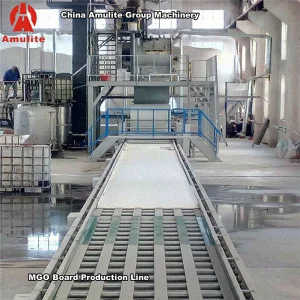
Product lines—such as AAC blocks, EPS sandwich panels, and MGO fireproof boards—must yield end products that strictly comply with Indian standards including IS 2185 (Part 3) for load-bearing and non-load-bearing autoclaved cellular concrete blocks, and IS 14862 for fiber cement flat sheets. Sourcing machinery designed specifically around these target parameters guarantees immediate product marketability in India.
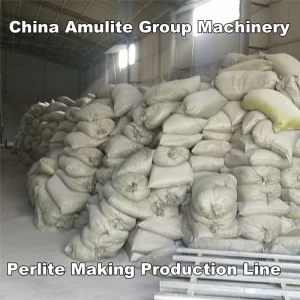
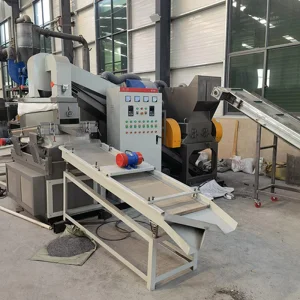
With stringent municipal solid waste management rules and industrial byproduct mandates in India, modern machinery must integrate recycling capabilities. Equipment such as copper wire granulators, perlite expansion systems, and crushed concrete recycling jaw crushers enable Indian industrial plants to monetize scrap, recycle operational sludge, and reduce land-fill footprints.
The transition from manual operation to cloud-connected, telemetry-driven plant management systems across South Asia.
The future of manufacturing in India belongs to smart, connected factories. Today's leading accessories equipment suppliers deliver intelligent hardware equipped with industrial Internet of Things (IIoT) modules. Through centralized SCADA interfaces and cloud dashboard monitoring, plant engineers in Delhi, Mumbai, or Bengaluru can monitor real-time energy metrics, track blade wear on four-side edge cutting machines, evaluate autoclave steam pressure curves, and diagnose PLC faults remotely.
Furthermore, automated material handling—such as robotic board stackers, automatic mold oiling systems, and optical sensor-guided packaging lines—eliminates labor-intensive bottlenecks, mitigates human error, and maintains consistent product output rates regardless of shift changes or regional holiday disruptions.
Direct answers regarding machinery customized for Indian industrial setups, installation logistics, duty structures, and operational SLAs.
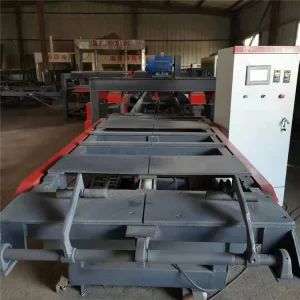
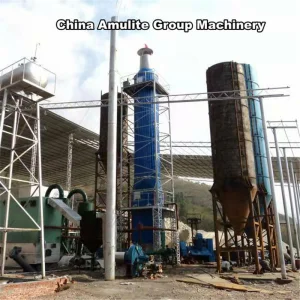
Explore our complete range of specialized equipment, recycling systems, and board lines designed for global industrial deployment.
Looking to set up a new production plant in India, upgrade your existing line accessories, or request detailed technical drawings and ROI estimates? Our process engineering team is ready to assist.
Send Inquiry Now