Choosing a Wall Panel Forming Machine is a practical investment, not just a search for the lowest quoted price. Manufacturers worldwide offer lines that turn steel coils into profiled panels through roll forming, cutting, and material handling. Yet similar product descriptions can hide meaningful differences in frame rigidity, roller design, control systems, and production support.
A useful comparison looks beyond advertised speed. Buyers should check the compatible coil width and thickness, panel profile range, cutting tolerance, changeover time, and safety features. Ask for drawings, sample panels, and clear specifications for motors and hydraulic components. Where possible, review a machine in operation and speak with a customer using a similar material. Small details matter: a rough panel edge, frequent roller adjustment, or a slow profile change can affect daily output.
This guide introduces notable wall panel forming machine manufacturers and the factors that help distinguish them. It considers engineering capability, customization, quality control, delivery, installation, and after-sales service. These points are not equally important for every factory; a small workshop may value simple operation, while a high-volume plant may prioritize automation and uptime. No supplier is perfect. A polished brochure cannot replace a careful technical review, and even a strong machine may need tuning after installation. Treat manufacturer claims as starting points, then verify them against your panel design, production targets, and local service needs.
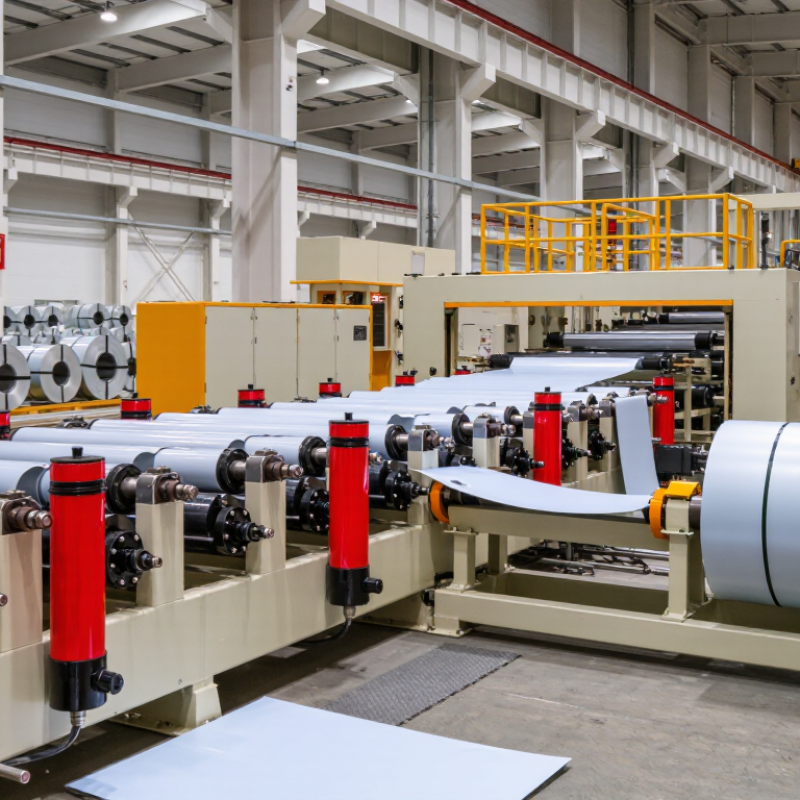
A wall panel forming machine turns flat metal coil into a continuous profile used in wall systems. Depending on its design, it forms steel or aluminum into ribs, channels, or panel skins. The profile adds stiffness and helps panels fit together. Some production lines make single metal sheets; others prepare skins for insulated panels. Small details matter. Material thickness, coil width, and coating all affect the finished shape and machine settings. The process sounds straightforward, but setup errors can cause waviness or uneven edges.
Production usually starts with a coil mounted on a decoiler. The sheet is guided and leveled before entering forming stations, where paired rollers gradually shape it. Each station makes a small change, reducing stress on the material. The formed strip then moves to a cutting unit, which trims panels to the programmed length. Sensors can track feed speed and help maintain consistent cuts. Operators still need to check dimensions, roller alignment, and surface marks during production. A short trial run is useful. Machine capability varies, so buyers should compare the intended profile, material range, line speed, and available guarding with actual production needs.
Wall panel forming systems combine several technologies to turn flat coil into consistent profiles. A decoiler feeds the sheet, while leveling rollers reduce coil set and waviness. Servo-driven feed controls strip length before roll-forming stations shape the edges and ribs. Each station makes a small adjustment. This gradual forming helps limit surface marks and uneven bends. The tooling must match the panel’s material, thickness, and profile; one setup rarely suits every specification.
Control systems coordinate feed speed, punching, and cutoff. Sensors can detect strip position or feeding errors, while a programmable controller stores production settings. Hydraulic or servo-actuated cutters separate panels at preset lengths. In practice, stable results depend on more than automation. Worn rollers, misaligned shafts, or inconsistent incoming coil can shift dimensions. A precise control screen cannot fix poor mechanical alignment. This is easy to overlook.
Tips: Check finished panels at both ends and the center. Compare rib spacing, cut length, and edge alignment with the drawing. Keep sample pieces from each setup. They make small changes easier to assess, though they do not replace regular machine inspection.
Technology overview: wall-panel production systems differ by material and process. Equipment configuration, production speed, and achievable tolerances depend on the product design and plant setup.
| System Type | Core Forming Technology | Typical Materials | Main Production Stages | Key Process Controls | Common Panel Uses |
|---|---|---|---|---|---|
| Metal stud and track roll-forming line | Progressive roll forming bends coil-fed sheet through successive roller stations to create repeatable profiles. | Galvanized or coated steel sheet | Coil loading, straightening, roll forming, cutting to length, and profile stacking or bundling | Feed alignment, roll settings, profile dimensions, cut length, and hole or notch position | Framing components for drywall partitions and light-gauge steel wall assemblies |
| Insulated metal sandwich-panel line | Continuous production combines profiled metal facings with an insulating core; bonding and curing methods depend on the core and system design. | Coated steel or aluminum facings; commonly mineral wool or polymer foam cores | Facing preparation, profiling, core placement or application, bonding, curing, trimming, and cutting | Facing profile, core thickness, adhesive or process conditions, panel alignment, and finished length | Building envelopes, industrial buildings, and temperature-controlled facilities |
| Precast concrete wall-panel system | Concrete is placed into reusable molds and consolidated, commonly using vibration; panels are cured before demolding. | Concrete mix, reinforcement, and cast-in inserts where specified | Mold preparation, reinforcement and insert placement, concrete casting, consolidation, curing, and demolding | Mold dimensions, reinforcement location, concrete consistency, consolidation, curing, and surface finish | Structural and architectural walls, subject to the engineered panel design |
| AAC panel production system | A porous cementitious mix is cast and pre-cured, then cut to size and autoclaved using steam under pressure. | Aerated autoclaved concrete mix, typically based on cementitious binder, silica-bearing material, water, and an aerating agent | Batching, mixing, casting, pre-curing, wire cutting, autoclave curing, and finishing | Batch proportions, rising and pre-curing conditions, cutting accuracy, and autoclave cycle | Lightweight wall and partition panels; reinforcement may be included according to the product design |
| Fiber-cement sheet and panel line | Depending on the product, forming may use sheet-building, pressing, or extrusion, followed by curing and finishing. | Cementitious binder, cellulose or other reinforcing fibers, mineral fillers, and water | Mix preparation, sheet or profile forming, pressing where required, curing, cutting, and surface finishing | Mix consistency, sheet thickness, pressing or forming conditions, moisture, curing, and edge quality | Exterior cladding, soffits, and interior wall linings, depending on the product specification |
| Modular wall-panel assembly line | Automated or semi-automated stations assemble framing, sheathing, insulation, and services into a designed panel build-up. | Timber or light-gauge steel framing with specified sheathing and insulation materials | Component feeding, framing, fastening, sheathing, service integration, inspection, and panel handling | Component positioning, fastening pattern, squareness, opening dimensions, and assembly sequence | Factory-built wall sections for modular and off-site construction |
A useful evaluation starts with the panel, not the sales brochure. Confirm the machine supports your required material, thickness, width, and profile. Ask for a sample run using comparable coil stock. Watch how smoothly material enters each station, and inspect the cut edges for burrs or distortion. Watch the edges closely. Ask for dimensional results from several panels, not just one perfect sample.
Check the machine frame, rollers, drive system, controls, and safety features. Request a maintenance schedule and a list of wear parts with realistic delivery times. Compare sustained output, including setup and profile changes, rather than relying on a peak-speed figure. A polished demonstration is not enough. Ask how operators are trained and what support is available during installation. References from facilities with similar production needs can help verify these claims.
Assess the full operating cost, including tooling, energy use, scrap, maintenance, and service. Request written specifications and agree on practical acceptance tests before purchase. A lower quote is not automatically a poor choice; it may suit a simpler production plan. Still, unclear service terms deserve scrutiny. No checklist removes uncertainty. Leave time to test your own material, since results can differ from a supplier’s demonstration.
Regional strengths matter because wall-panel lines must match local materials, production volumes, and installation practices. In East Asia, buyers often find equipment designed for high-throughput production, with automated feeding and cutting. European suppliers tend to emphasize precise profiles and integrated insulation processes. North American lines commonly offer configurable widths and lengths for varied project specifications. These are tendencies, not fixed rules.
McKinsey’s 2019 analysis, Modular Construction: From Projects to Products, estimated a potential annual modular-construction market of $130 billion in the United States and Europe by 2030. That projection helps explain interest in repeatable panel production, but it is not a forecast for forming machines alone. The 2023 Global Status Report for Buildings and Construction found that buildings accounted for 34% of global energy demand and 37% of energy- and process-related carbon emissions in 2022. Insulated wall panels can support efficiency goals, though results depend on design and installation.
Compare regional manufacturers by checking sample profiles, changeover time, sheet-thickness range, and local service access. Ask to see a real production run. Small details count. A fast line may still create waste if tooling changes are slow. Regional labels can mislead, too: some suppliers build locally, while others integrate imported components. That distinction is easy to miss.
Wall panel production supports housing, offices, warehouses, and modular buildings. Different projects require different panel widths, thicknesses, finishes, and connection details. Forming equipment must match the material and the intended installation method. A panel that looks uniform on the line may still need careful checks at its edges.
In residential construction, panels can speed up enclosure and partition work when dimensions stay consistent. Commercial and industrial projects may require larger spans, stronger profiles, or surfaces that accept insulation and service fittings. On a production floor, operators watch feed alignment, roller pressure, and cut length. Small deviations matter. A few millimeters can complicate installation across a long wall.
Emerging systems increasingly use sensors, programmable controls, and digital production records to track settings and reduce repeat errors. Flexible tooling can help plants switch between panel designs with less downtime, though changeovers still require skilled setup. Energy use and scrap also shape equipment choices, especially when production runs vary. Automation helps, but it does not replace inspection. Data can reveal a drift; someone still needs to decide whether the cause is material variation, worn tooling, or an incorrect setting. Not every upgrade pays off immediately.
Building-sector energy use and emissions highlight why manufacturers are increasingly focused on panels that improve energy efficiency and reduce material-related impacts.
These are global buildings-and-construction figures, not wall-panel market shares. Source: UNEP, Global Status Report for Buildings and Construction 2023/24 (2022 data).
It feeds flat coil into the line. Leveling rollers reduce coil set and waviness. Simple, but essential.
Servo-driven feed controls strip length. Roll-forming stations gradually shape the edges and ribs, helping limit marks and uneven bends.
Tooling needs to suit the material, thickness, and profile. One setup rarely fits every specification. This is easy to overlook.
Controls coordinate feed speed, punching, and cutoff. Hydraulic or servo-actuated cutters separate panels at preset lengths. Sensors can flag feeding errors.
No. Worn rollers, misaligned shafts, or inconsistent coil can shift dimensions. A precise screen cannot fix poor mechanical alignment.
Check both ends and the center. Compare rib spacing, cut length, and edge alignment with the drawing. Keep setup samples, too.
They are used in housing, offices, warehouses, and modular buildings. Project needs vary in width, thickness, finish, and connection details.
A few millimeters can complicate fitting across a long wall. A panel may look uniform on the line and still need edge checks.
Sensors and digital records can track settings and reveal drift. Flexible tooling may reduce changeover time, but skilled setup still matters. Not every upgrade pays off immediately.
A Wall Panel Forming Machine converts raw materials into uniform wall panels through a coordinated sequence of feeding, shaping, cutting, and finishing. Depending on the production system, key technologies may include automated material handling, precision forming components, computer-based controls, and quality-monitoring features. Together, these systems help manufacturers produce panels consistently while managing production speed, dimensions, and material use.
When comparing manufacturers, buyers can consider machine capacity, product compatibility, automation options, build quality, technical support, and long-term operating requirements. Wall panel forming equipment serves a range of construction and manufacturing applications, with designs selected to match different panel types and production needs. Emerging trends include greater automation, improved process monitoring, adaptable production lines, and more efficient use of materials, helping the industry respond to changing performance and manufacturing demands.