What Are China Top EPS Sandwich Panel Machine Suppliers?

Time:2026-09-21 Author:Aria
0%

Choosing among China Eps Sandwich Panel Machine suppliers requires more than comparing catalogue prices. A reliable supplier should match your panel size, production speed, foam density, adhesive system, and local electrical standards. This guide introduces leading manufacturers and explains how to assess their real capabilities.

Look for machines with stable lamination pressure, accurate cutting, consistent glue application, and accessible control systems. Ask for production videos, factory test records, component brands, and references from comparable plants. A serious supplier should explain installation, operator training, spare parts, maintenance intervals, and warranty coverage clearly. Small details matter. A poorly aligned cutter can create uneven panel edges, while unstable feeding may damage the EPS core.

Supplier authority should be checked through verified certifications, documented export experience, and transparent technical communication. However, certifications alone do not prove excellent performance. Some published specifications may omit power consumption, setup time, or actual output under continuous operation. That deserves careful questioning. Independent testing is better than confident promises.

This overview focuses on practical selection rather than promotional rankings. It considers equipment design, customization, service responsiveness, production evidence, and long-term operating costs. The “best” supplier may differ for a small workshop, a high-volume factory, or a specialized construction market. No comparison is perfect. Buyers should confirm every important claim through samples, live demonstrations, contracts, and measurable acceptance standards before placing an order.
What Are China Top EPS Sandwich Panel Machine Suppliers?

Definition and Role of EPS Sandwich Panel Machine Suppliers in China

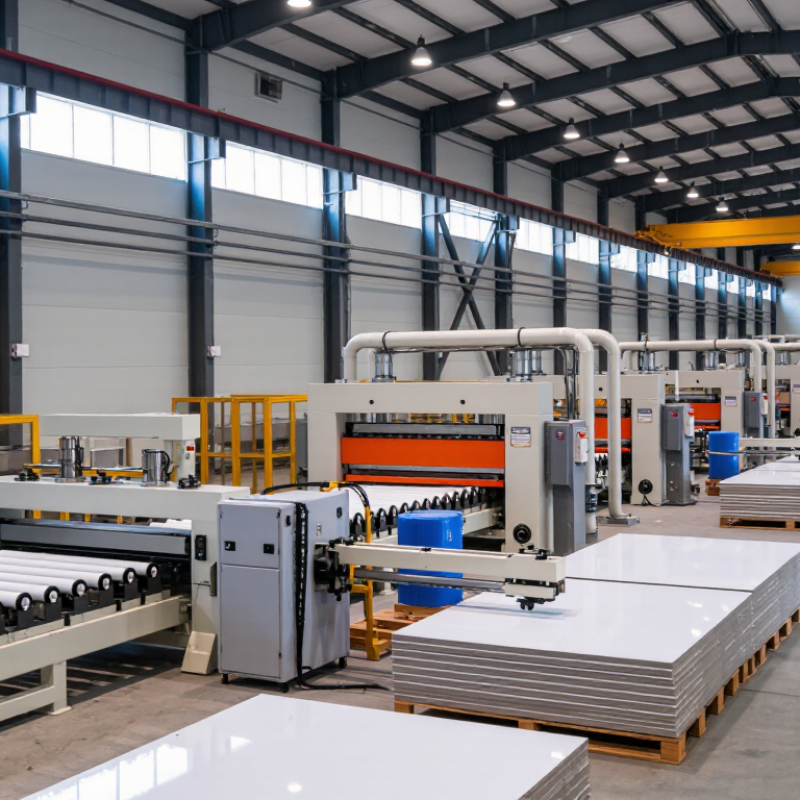
EPS sandwich panel machine suppliers in China are manufacturers and system integrators that design, produce, install, and service equipment for insulated building panels. Their machines usually handle EPS foam feeding, shaping, cutting, adhesive application, lamination, pressing, and length control. The supplier’s role is not limited to selling steel equipment. It also includes process guidance, operator training, spare-parts planning, and production-line adjustment.

Market data explains this importance. Grand View Research estimates that the global expanded polystyrene market will continue growing through 2030, supported by construction insulation demand. A 2024 report from Fortune Business Insights also identifies building applications as a major EPS consumption area.

These reports measure different market boundaries, so their figures are not perfectly comparable. That matters when buyers assess supplier claims. China’s large construction sector creates strong demand, but demand alone does not prove machine quality.

Experienced suppliers should demonstrate stable panel thickness, accurate cutting, controlled bonding pressure, and consistent foam density. Factory testing should include sample panels, speed records, temperature settings, and electrical safety checks.

A serious supplier also explains maintenance intervals and the effect of humidity on adhesive performance. Some quotations look attractive at first. Hidden costs may appear later.

Buyers should request production videos, inspection records, and references from comparable factories. The evaluation is imperfect, but transparent evidence is more reliable than a polished brochure.

Key Equipment and Technologies Offered by Chinese Manufacturers

China’s leading EPS sandwich panel machine suppliers compete through equipment integration, not price alone. A complete line usually includes coil decoiling, roll forming, EPS cutting, adhesive application, panel pressing, trimming, and automatic stacking. Servo-driven feeders improve length accuracy. Heated wire cutters create cleaner foam edges. Continuous presses also maintain stable thickness across long panels.

The International Energy Agency reports that buildings consume about 30% of global energy and produce roughly 26% of energy-related emissions. This pressure increases demand for efficient insulated panels.

Chinese manufacturers now offer PLC controls, variable-speed conveyors, automatic glue systems, and digital temperature monitoring. Some lines support panel thicknesses from approximately 50 to 250 millimeters. That range suits warehouses, cold rooms, workshops, and temporary buildings.

However, advertised speed needs careful checking. Factory tests may use ideal foam density and short panels.

The most reliable suppliers provide production trials, electrical schematics, spare-part lists, and operator training. Buyers should inspect adhesive coverage, pressing pressure, cutting tolerance, and finished-panel flatness. EN 14509 testing references can help evaluate structural and thermal performance, although local compliance remains essential.

I would also request energy-consumption data per panel. It is often missing. A cheaper line may require more manual adjustment, especially when EPS density changes.

In practice, control software, service response, and replacement-part availability can matter more than a spectacular maximum output figure. There is no perfect machine. Good engineering still needs disciplined operation.

How to Evaluate China’s EPS Sandwich Panel Machine Suppliers

How to Evaluate China’s EPS Sandwich Panel Machine Suppliers

Evaluating China’s EPS sandwich panel machine suppliers requires more than comparing catalog prices. Check the supplier’s operating history, engineering team, and completed installations. Ask for customer references from projects with similar panel thickness, output, and working conditions. A supplier should explain core density control, panel dimensions, adhesive application, cutting accuracy, and production speed in practical terms.

Request a video or live demonstration. Watch how the machine handles foam blocks, steel sheets, edge alignment, and emergency stops. Inspect the control cabinet, wiring labels, sensors, and maintenance access. Review test reports for electrical safety, noise, and material performance. Certificates matter, but their issuing bodies and validity should be verified independently.

Do not ignore after-sales support. Confirm installation guidance, operator training, spare-parts availability, response times, and software support. A clear contract should define output tolerances, delivery dates, warranty coverage, and acceptance testing. I have found that polished showrooms can hide weak production control. Factory cleanliness is useful evidence, but it is not proof of consistency. Ask to inspect several finished panels from different shifts. Small gaps, uneven glue lines, or unstable dimensions may reveal deeper problems. A lower quotation can become expensive when local technicians cannot diagnose faults quickly. Pay attention to the details.

Major Supplier Types and Their Market Specializations

EPS sandwich panel machine suppliers generally fall into several practical categories. Integrated equipment manufacturers build forming, cutting, foaming, and laminating systems. Their strength is coordination. One control platform can simplify operator training. This suits factories seeking steady output and fewer production handovers. However, integrated packages may cost more and offer less flexibility for unusual panel designs.

Automation-focused suppliers serve high-volume producers. They emphasize servo drives, automatic stacking, digital recipes, and production tracking. These features matter when panels require consistent thickness and core density. Regional engineering suppliers usually provide compact lines for small and medium plants. They may adapt voltage, workshop layouts, and maintenance plans more quickly. Response time matters. A delayed sensor can stop a full shift. Custom machinery specialists target cold-room panels, curved profiles, special widths, or demanding insulation specifications. Their expertise helps when standard dies cannot meet project requirements.

Used-equipment dealers and refurbishment workshops serve buyers with limited capital. They inspect motors, rollers, heaters, and control cabinets before resale, but inspection depth varies. Ask for test videos, dimensional tolerances, spare-part lists, and commissioning terms. A cheap machine is not always economical. Total cost includes energy use, adhesive consumption, downtime, installation, and training. No category is perfect. Specifications can look impressive while service coverage remains vague. Buyers should compare real samples, not only brochures. Reliability appears through documented tests, clear warranties, traceable components, and technicians who explain limitations honestly.

What Are China Top EPS Sandwich Panel Machine Suppliers? - Major Supplier Types and Their Market Specializations

Supplier Type Core Market Specialization Typical EPS Panel Equipment Common Panel Applications Main Production Characteristics Typical Buyer Profile Key Selection Criteria
Complete Production Line Integrators Turnkey EPS sandwich panel manufacturing projects EPS pre-expander, block molding system, cutting machine, laminating line, adhesive system, profiling unit, conveying equipment and packaging equipment Wall panels, roof panels, cold-room panels and general building envelope systems Designed for coordinated production from raw material expansion to finished panel handling New factories, construction-material manufacturers and overseas investors establishing a full production facility Line integration, output consistency, installation support, operator training, spare parts and after-sales service
Continuous Panel Line Manufacturers Medium- to high-volume production of regularly sized panels Continuous laminating line, roll forming machine, core feeding system, adhesive application unit, automatic cutting system and stacking equipment Standard EPS color-coated steel roof and wall panels for industrial and commercial buildings Stable throughput, consistent panel length and reduced manual handling Established panel factories serving construction contractors, distributors and building-material dealers Production speed, panel-width range, thickness range, bonding quality, automation level and maintenance access
Batch-Type Panel Machine Suppliers Flexible and lower-volume EPS panel production Batch laminating press, manual or semi-automatic adhesive applicator, panel assembly table, cutting tools and basic conveying equipment Customized wall panels, small construction projects, temporary buildings and regional building-material production Lower initial investment and easier product changeover, with more labor involvement than continuous lines Small and medium-sized factories, start-ups and buyers testing local market demand Equipment flexibility, mold or panel-size adjustment, labor requirements, operating simplicity and total purchase cost
EPS Core Processing Equipment Specialists Preparation of expanded polystyrene cores for downstream panel assembly Pre-expander, EPS block molding machine, block cutting machine, contour cutter, aging silos and material handling system EPS cores used in sandwich panels, packaging products, insulation boards and lightweight construction components Focus on foam density, block uniformity, dimensional accuracy and material utilization Panel manufacturers that already own laminating equipment or need to upgrade their EPS core section Density control, steam consumption, block dimensions, cutting accuracy, automation and compatibility with existing lines
Customized and Non-Standard Equipment Builders Special panel dimensions, unusual layouts and project-specific production requirements Modified laminating systems, custom cutting equipment, special-width panel lines, integrated handling systems and tailored control cabinets Large-format panels, special roof profiles, modular buildings, agricultural structures and projects with non-standard specifications Higher design flexibility but usually longer engineering, testing and commissioning periods Manufacturers with unique product specifications or limited factory space Engineering capability, design documentation, testing procedures, dimensional tolerance and technical communication
Automation and Retrofit Suppliers Modernization of existing EPS sandwich panel production lines PLC control upgrades, servo-driven cutters, automatic stacking systems, sensors, production monitoring modules and replacement laminating units Existing panel factories seeking higher productivity, improved repeatability or reduced manual handling Extends the useful life of current machinery without requiring a complete factory replacement Operating factories with serviceable mechanical equipment but outdated control or handling systems Compatibility with existing machines, downtime during installation, programming support, safety functions and measurable productivity gains
Export-Oriented Project Suppliers International projects requiring shipping, documentation and remote technical support Standard or customized EPS panel lines supplied with export packaging, electrical documentation, installation guidance and remote commissioning support Industrial buildings, warehouses, workshops, cold-storage facilities and prefabricated structures in overseas markets Emphasis on container loading, electrical standards, spare-parts planning and multilingual technical documents Importers, overseas distributors, contractors and manufacturers in emerging construction markets Export experience, compliance documentation, packaging quality, delivery schedule, remote service and availability of replacement parts
Low-Cost Standard Equipment Suppliers Basic EPS panel production with limited automation Simple panel laminator, manual feeding table, basic cutting equipment and standard adhesive application system Small-scale construction panels, local building projects and entry-level production Accessible purchase price and straightforward operation, but typically lower automation and throughput Small workshops, first-time investors and buyers prioritizing initial affordability Actual production capacity, machine durability, safety protection, spare-parts availability and long-term operating cost

Purchasing, Installation, and After-Sales Service Considerations

Choosing an EPS sandwich panel machine supplier requires more than comparing prices. Check the machine’s panel thickness range, production speed, foam density control, and roller alignment. These details affect panel flatness, edge quality, and material waste. Request a complete configuration list, not a vague quotation. It should identify the cutting system, glue application method, control cabinet, and included spare parts.

Installation planning starts before delivery. The workshop needs a level floor, stable electricity, ventilation, and enough space for panel movement. Measure the doorway and loading route carefully. A machine may fit on paper but fail at the factory entrance. Ask the supplier for foundation drawings, installation videos, and a commissioning schedule. Operators should practice feeding materials, adjusting pressure, and responding to emergency stops. Small errors can damage several meters of panels.

After-sales service often determines long-term value. Confirm remote support hours, technician availability, warranty coverage, and response times in writing. Useful suppliers provide operating manuals, electrical diagrams, maintenance checklists, and training records. Keep common sensors, cutting blades, belts, and heating components onsite. This is not always convenient, but downtime costs more. A low purchase price can hide weak support. Even experienced buyers sometimes overlook local service capability, so supplier references and a live factory test deserve careful attention.

This reference model shows how buyers can prioritize EPS sandwich panel machine suppliers without relying on brand names. Machine performance and panel quality receive the highest weighting, followed by installation support, after-sales service, purchasing cost, and delivery planning. The percentages represent a practical procurement scoring framework rather than a supplier ranking.

FAQS

What equipment is usually included in a complete EPS sandwich panel production line?

It commonly includes coil decoiling, roll forming, EPS cutting, glue application, pressing, trimming, and automatic stacking. Servo feeders improve length accuracy. Heated wires can create cleaner foam edges.

What panel thickness range can these machines handle?

Many systems support roughly 50 to 250 millimeters. This range suits warehouses, cold rooms, workshops, and temporary buildings. Confirm the actual range in writing.

How should advertised production speed be evaluated?

Request a factory trial using your foam density and typical panel lengths. Ideal tests may use short panels. Real output can be lower.

Which technical details affect finished-panel quality?

Check roller alignment, foam density control, adhesive coverage, pressing pressure, cutting tolerance, and panel flatness. Small adjustments matter. Waste may increase when density changes.

What should a buyer inspect before ordering?

Request a complete configuration list, electrical schematics, spare-part details, foundation drawings, and commissioning plans. Ask about energy use per panel. This figure is often missing.

What workshop conditions are needed for installation?

Prepare a level floor, stable electricity, ventilation, and clear space for moving long panels. Measure doorways and loading routes. Paper fit is not enough.

What after-sales support should be confirmed?

Put remote support hours, technician availability, warranty coverage, and response times in writing. Ask for manuals, wiring diagrams, maintenance checklists, and training records.

Which spare parts and operator skills are important?

Keep sensors, cutting blades, belts, and heating components onsite. Operators should practice feeding, pressure adjustment, and emergency stops. Downtime hurts. Live testing still deserves attention.

Conclusion

China Eps Sandwich Panel Machine suppliers play an important role in the production of insulated construction panels used for walls, roofs, cold storage, workshops, and modular buildings. These suppliers typically provide complete production lines, including coil feeding systems, roll forming units, EPS core processing equipment, adhesive application systems, laminating sections, cutting devices, control panels, and packaging solutions. Different manufacturers may specialize in automatic high-speed lines, compact systems for small factories, or customized equipment for specific panel dimensions and production capacities.

When evaluating a supplier, buyers should consider machine structure, production speed, panel accuracy, energy efficiency, automation level, safety features, and compatibility with local power and material standards. Supplier experience, technical documentation, installation support, operator training, spare-parts availability, warranty terms, and response time are also essential. A careful purchasing process should define the required output, site conditions, delivery schedule, commissioning responsibilities, and after-sales service in advance. Choosing a suitable China Eps Sandwich Panel Machine supplier can help improve production stability, reduce operating costs, and support long-term business development.

Aria

Aria

Aria is a dedicated marketing professional with a deep passion for innovative strategies and a keen understanding of our company's product offerings. With a wealth of experience in the industry, Aria excels at crafting engaging content that highlights the unique features and benefits of our......