Top 10 Plastic Panel Extrusion Line Manufacturers?

Time:2026-10-10 Author:Mason
0%

The global plastics industry is expanding, but manufacturers face tighter demands on efficiency, quality, and material use. The OECD’s Global Plastics Outlook reported that global plastics production reached 353 million tonnes in 2019, more than double the 2000 level. This scale creates strong demand for reliable processing equipment, including the Plastic Panel Extrusion Line.

Industry reports from Grand View Research and MarketsandMarkets identify construction, automotive, packaging, and interior applications as important growth areas for plastic extrusion. Panel producers now evaluate more than purchase price. They examine output stability, sheet thickness control, energy consumption, automation, and compatibility with materials such as PVC, ABS, PP, and recycled compounds.

Small details matter.

A stable melt temperature can prevent visible waves across a panel surface. Consistent haul-off speed can protect dimensional accuracy during long production runs. These practical factors often separate an impressive machine brochure from dependable factory performance.

This guide reviews ten notable Plastic Panel Extrusion Line manufacturers through a practical, evidence-based lens. The comparison considers equipment design, production capacity, screw technology, calibration systems, downstream integration, technical support, and documented market experience. Information is drawn from company specifications, industry publications, and recognized market research reports.

No ranking is perfectly universal. A compact processor may value flexibility, while a large construction supplier may prioritize nonstop throughput. Regional service coverage also changes the real buying decision. Readers should verify current certifications, warranty terms, testing records, and local support before selecting a supplier. Some published claims remain difficult to compare directly, so independent factory references deserve careful attention.
Top 10 Plastic Panel Extrusion Line Manufacturers?

What Is a Plastic Panel Extrusion Line?

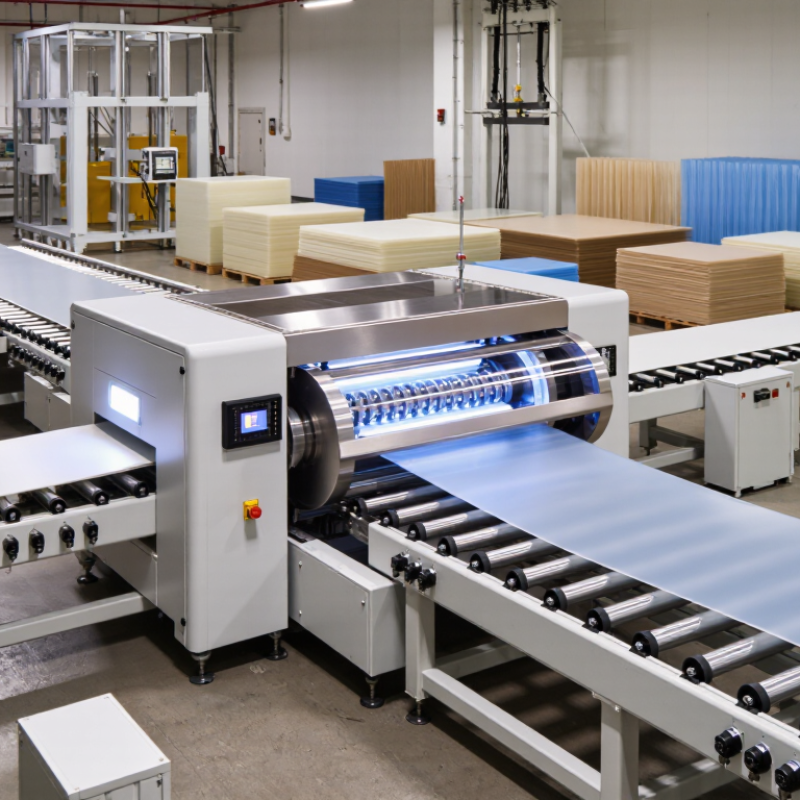
A plastic panel extrusion line is a continuous manufacturing system for producing flat or textured panels. It melts plastic pellets, shapes the melt through a flat die, and cools the sheet through calibrated rollers. A typical line includes a hopper, extruder, screen changer, T-die, cooling stack, haul-off unit, and cutting system. Some lines also add co-extrusion, embossing, laminating, or automatic thickness control.

Material selection changes the entire process. PVC, PP, PE, and ABS require different temperatures, screw designs, and cooling conditions. Panel thickness, width, surface gloss, and impact strength must remain stable across every production run. The OECD’s Global Plastics Outlook reports that global plastic production reached 460 million tonnes in 2019. That scale increases pressure for efficient processing and better material recovery. However, recycled feedstock can vary in moisture, color, and viscosity. Operators must adjust settings instead of trusting one permanent recipe.

Industry market studies reflect continued demand for extrusion equipment. Grand View Research estimates the global plastic extrusion market will expand at about 4% annually through 2030. A reliable line should therefore combine output capacity with measurable quality control. Useful checks include melt pressure, die temperature, panel thickness, cooling speed, and dimensional shrinkage. In practice, a beautiful sample can hide unstable production. Energy consumption may also rise when cooling is poorly balanced. Buyers should test real production material, not only laboratory pellets, before approving a line.

How to Evaluate Plastic Panel Extrusion Line Manufacturers

How to Evaluate Plastic Panel Extrusion Line Manufacturers

Global plastics production reached 413.8 million tonnes in 2023, according to PlasticsEurope’s Plastics—The Fast Facts 2024. This scale makes equipment selection more demanding. A suitable manufacturer should prove stable output, not merely advertise high capacity. Request production records for your exact resin, panel width, thickness, and surface finish. Numbers matter.

During a factory audit, inspect the extruder, die, calibrator, haul-off, and cutting unit closely.

Ask for melt-temperature stability, thickness variation, energy consumption, and verified hourly output. The data should come from factory acceptance tests or comparable installations.

A manufacturer that shares raw test records appears more reliable than one offering polished averages.

Request customer references, spare-parts lead times, operator training, and remote troubleshooting procedures.

Energy deserves serious attention.

The International Energy Agency identifies plastics as a major driver of future oil demand, so efficient processing has practical value. Compare specific energy use in kilowatt-hours per kilogram, not only motor size. Check whether the control system records alarms and production changes. That detail can expose hidden losses.

It is easy to overvalue automation. I would still question maintenance access, cleaning time, and die-change difficulty. A technically advanced line may disappoint if one operator cannot safely manage routine adjustments.

Supplier evaluation should include a witnessed trial using your own material and recycled-content targets. Even then, results can vary with formulation, temperature, and operator skill. That limitation deserves honest documentation.

Top 10 Plastic Panel Extrusion Line Manufacturers

Top 10 Plastic Panel Extrusion Line Manufacturers

A credible ranking of the top 10 plastic panel extrusion line manufacturers should begin with measurable production evidence. Grand View Research estimates the global plastic extrusion machine market at approximately USD 7.6 billion in 2023, with growth near 4.5% annually through 2030. This expansion reflects demand for lightweight construction panels, insulated boards, and recycled-content products. However, market size alone does not prove manufacturing quality.

Experienced buyers should compare line output, panel width, screw design, melt stability, and energy consumption. A reliable manufacturer should provide factory trials, documented tolerance results, and responsive technical support. The Plastics Industry Association highlights recycling and processing efficiency as continuing priorities across the plastics sector. That makes stable processing of recycled resin increasingly important. Small details matter. Check cooling calibration, die adjustment, and automatic thickness control. Ask for actual production data, not attractive brochures. Some suppliers report peak capacity, while practical output may be lower. This is easy to overlook. A fair Top 10 evaluation should also examine spare-part availability, operator training, safety documentation, and service response times. The best line is not always the fastest. It is the one that maintains consistent panel thickness, clean surfaces, and manageable waste during long production runs. Industry rankings can still miss the right fit, especially when local labor costs and material formulations differ.

Top 10 Plastic Panel Extrusion Line Manufacturers?
Rank Manufacturer Profile Primary Panel Materials Typical Panel Applications Common Extrusion Configuration Typical Panel Width Typical Thickness Indicative Output Range Common Downstream Equipment Typical Automation Features
1 Profile 01 PVCWPC Interior wall panels, ceiling panels, decorative cladding Conical twin-screw extruder with calibrated forming die 200–600 mm 3–12 mm 180–450 kg/h Vacuum calibration table, haul-off, cutting unit, stacker PLC control, recipe storage, automatic temperature regulation
2 Profile 02 PVCASA/PVC Exterior siding, façade panels, weather-resistant cladding Co-extrusion line for colored or capped surfaces 150–500 mm 2–10 mm 150–400 kg/h Embossing roller, cooling unit, edge trimming, online printer Automatic thickness monitoring and synchronized line speed
3 Profile 03 PPPE Industrial partitions, protective sheets, transport panels Single-screw extruder with flat sheet die 800–2,100 mm 1–8 mm 250–700 kg/h Three-roll calendar, cooling conveyor, edge cutter, winder Closed-loop thickness control and automatic roll change
4 Profile 04 WPCPVC Outdoor decking, fencing panels, architectural profiles Parallel twin-screw extrusion with intensive mixing section 300–800 mm 8–25 mm 200–550 kg/h Profile die, calibration mold, water cooling, saw cutter Gravimetric feeding, motor-load monitoring, fault alarms
5 Profile 05 ABSHIPSPMMA Refrigerator liners, sanitary panels, appliance components Single-screw sheet extrusion with polishing calendar 600–2,000 mm 0.8–6 mm 180–600 kg/h Polishing rolls, edge trim recovery, haul-off, automatic cutter Automatic gauge control and web-tension regulation
6 Profile 06 PVCCPVC Cleanroom partitions, construction panels, utility cladding Twin-screw extrusion with corrosion-resistant melt-contact parts 250–700 mm 4–15 mm 160–420 kg/h Vacuum sizing, cooling table, automatic saw, dust extraction Centralized HMI, process data logging, safety interlocks
7 Profile 07 PETPLARPET Thermoforming sheets, packaging panels, recyclable sheet products Single-screw sheet line with melt filtration and calendar rolls 800–2,500 mm 0.3–4 mm 300–900 kg/h Screen changer, three-roll calendar, edge trim system, winder Automatic die-bolt adjustment and roll-gap control
8 Profile 08 PCABS/PC Impact-resistant guards, lighting panels, technical enclosures High-torque single-screw line with precision flat die 500–1,800 mm 0.5–8 mm 220–650 kg/h Chill rolls, edge trimming, surface protection, sheet cutter Infrared temperature sensing and automatic thickness feedback
9 Profile 09 PVC foamWPC foam Signboards, furniture boards, advertising panels Foam extrusion line with controlled cell nucleation 600–2,200 mm 3–30 mm 180–500 kg/h Foam calibration table, trimming unit, sanding or cutting station Density control, automatic foaming-agent dosing, recipe management
10 Profile 10 PEPPEVA Protective liners, lightweight construction sheets, industrial covers Multi-layer sheet extrusion with optional co-extrusion module 900–2,400 mm 0.5–10 mm 250–750 kg/h Static mixer, polishing calendar, automatic cutter, sheet stacker Layer-ratio control, energy monitoring, remote diagnostics

The specifications shown are representative market ranges for plastic panel extrusion systems; actual capabilities depend on material formulation, panel geometry, die design, and line configuration.

Key Technologies Used in Plastic Panel Extrusion

Plastic panel extrusion lines depend on controlled heat, pressure, and cooling. The screw design is central. Single-screw systems often process stable PVC or PE compounds efficiently. Twin-screw systems provide stronger mixing for filled, recycled, or heat-sensitive materials. According to Plastics Europe’s Plastics—The Fast Facts 2024, global plastics production reached 413.8 million tonnes in 2023. That volume increases pressure to process recycled feedstock consistently.

Gravimetric dosing improves material accuracy before melting. Co-extrusion can place a durable skin over a recycled core, reducing cost without sacrificing appearance. A calibrated die controls panel width and thickness. Vacuum calibration tables then stabilize the hot profile against smooth metal plates. Cooling water should remain uniform. Small temperature differences can create warping, gloss variation, or internal stress.

Modern lines add infrared thickness gauges and closed-loop controls. These systems adjust haul-off speed or die settings when measurements drift. Inline cameras can identify scratches, bubbles, and edge damage before stacking. Energy monitoring also matters, because heaters, cooling pumps, and drives operate continuously. A 2023 International Energy Agency analysis notes that industrial efficiency depends heavily on motor systems and process control. Still, automation is not a cure-all. Poor material drying or irregular grinding can defeat expensive sensors. In practical trials, operators should record melt pressure, cooling temperature, and panel flatness together. The data often reveals a less obvious problem.

Top 10 Plastic Panel Extrusion Line Manufacturers? — Key Technologies Used in Plastic Panel Extrusion

Representative melt-temperature midpoints for common plastic panel materials processed on modern extrusion lines.

Plastic panel extrusion lines typically combine gravimetric dosing, material drying or compounding, single-screw or twin-screw extrusion, flat-die distribution, vacuum calibration, controlled cooling, haul-off, inline thickness measurement, edge trimming, and automatic cutting or stacking. The temperatures shown are representative melt-temperature midpoints; actual settings vary with formulation, filler content, panel thickness, die design, and line speed.

How to Choose the Right Manufacturer for Your Production Needs

A top-ten list is only a starting filter. The right plastic panel extrusion line manufacturer must match your resin, panel width, thickness range, and target output. PlasticsEurope’s Plastics—the Fast Facts 2023 reported 400.3 million tonnes of global plastic production in 2022. That scale increases pressure on manufacturers to deliver stable processing and lower material waste.

Ask each supplier for a documented trial using your actual material. Request samples showing thickness variation, surface quality, warpage, and output stability. A polished brochure is not enough.

Check screw design, die adjustment, cooling calibration, haul-off control, and automatic thickness monitoring. Small details matter. Also review factory acceptance tests and previous installations with similar panels.

Energy deserves careful attention. The U.S. Department of Energy reports that motor-driven systems can consume more than half of industrial electricity. Compare heater efficiency, drive technology, standby consumption, and measured output per kilowatt-hour. Service capability is equally important. Confirm spare-parts availability, remote diagnostics, technician response time, software updates, and operator training.

Ask for the total cost over five years, not only the purchase price. Some impressive quotations hide expensive tooling or maintenance. I would also challenge promised capacity; maximum output may require ideal resin, perfect cooling, and continuous production. That is not always your factory reality.

FAQS

What should I compare when selecting a plastic panel extrusion line manufacturer?

Compare output, panel width, thickness range, screw design, melt stability, and energy use. Brochures are not enough. Request measured factory data.

Why should suppliers test my actual plastic material?

Different resins and recycled materials process differently. A trial can reveal thickness variation, warpage, surface defects, and unstable output. Use your own material whenever possible.

Which production details deserve close inspection?

Check cooling calibration, die adjustment, haul-off control, and automatic thickness monitoring. These details affect panel surfaces and consistency. Small details matter.

How can I verify a supplier’s promised production capacity?

Ask whether the figure shows peak output or practical continuous output. Request factory trial records under realistic resin, cooling, and operating conditions. Maximum capacity may disappoint.

What energy factors should I evaluate?

Compare heater efficiency, drive technology, standby consumption, and output per kilowatt-hour. Motor-driven equipment can use substantial industrial electricity. Measure, do not guess.

What service support should a reliable manufacturer provide?

Confirm spare-part availability, remote diagnostics, software updates, technician response times, and operator training. Ask for support procedures after installation. Delays become expensive.

How should I compare the total cost of different extrusion lines?

Review purchase price, tooling, maintenance, energy, spare parts, training, and expected waste. Calculate costs over five years. Cheap equipment may not stay cheap.

Can a top-ten ranking identify the best manufacturer for every factory?

No. A ranking is only an initial filter. The right line must match your resin, panel dimensions, labor conditions, and target output. I might overvalue headline capacity. Your factory reality matters more.

Conclusion

A Plastic Panel Extrusion Line is an integrated production system designed to melt, shape, cool, and finish thermoplastic materials into continuous panels with consistent dimensions and surface quality. This article explains how the line works, including material feeding, extrusion, calibration, cooling, cutting, and optional surface treatment. It also outlines the key factors for evaluating manufacturers, such as engineering experience, equipment reliability, customization capabilities, quality control, energy efficiency, after-sales support, and production capacity.

The overview compares the qualities to look for when selecting among leading Plastic Panel Extrusion Line manufacturers without focusing on specific brands. It also introduces important technologies, including precise temperature control, advanced die design, automated thickness adjustment, online monitoring, and efficient cooling systems. Finally, readers will learn how to match a manufacturer’s technical expertise, material compatibility, output requirements, budget, and long-term service capabilities with their own production goals.

Mason

Mason

Mason is a seasoned marketing professional with a deep expertise in the company's offerings and a passion for driving brand awareness. With a strong background in digital marketing strategies, he has an innate ability to connect with diverse audiences and effectively communicate product benefits.......