Choosing the right Eps Sandwich Panel Forming Machine is a production decision, not a simple equipment purchase. The machine must match your panel width, core thickness, foam density, and planned output. A line designed for 50-millimeter panels may struggle with 150-millimeter cores. That difference matters.
Martin Keller, a senior EPS process consultant with practical factory experience, says, “A reliable machine should make consistent panels before it makes fast panels.” This principle deserves attention. High speed looks attractive, but unstable feeding, uneven adhesive coverage, or poor roller pressure can create visible gaps and weak bonding. Check the forming path carefully. Watch how sheets enter, how the EPS core aligns, and how pressure remains distributed across the panel surface.
This guide examines the details behind a dependable Eps Sandwich Panel Forming Machine. It considers forming accuracy, heating control, glue application, cutting tolerance, PLC operation, energy use, and maintenance access. Supplier support also matters. A responsive technician can prevent a small sensor fault from becoming a costly production halt.
Do not trust impressive specifications alone. Ask for sample panels. Measure their thickness, flatness, edge quality, and bonding strength. Review actual production footage when possible. Speak with users operating similar materials.
No machine is perfect.
A lower-priced model may appear efficient, yet hidden adjustment time can reduce real output. That is an uncomfortable point, but it deserves honesty. The best choice balances performance, serviceability, safety, and long-term operating cost. A careful evaluation protects both product quality and business credibility.
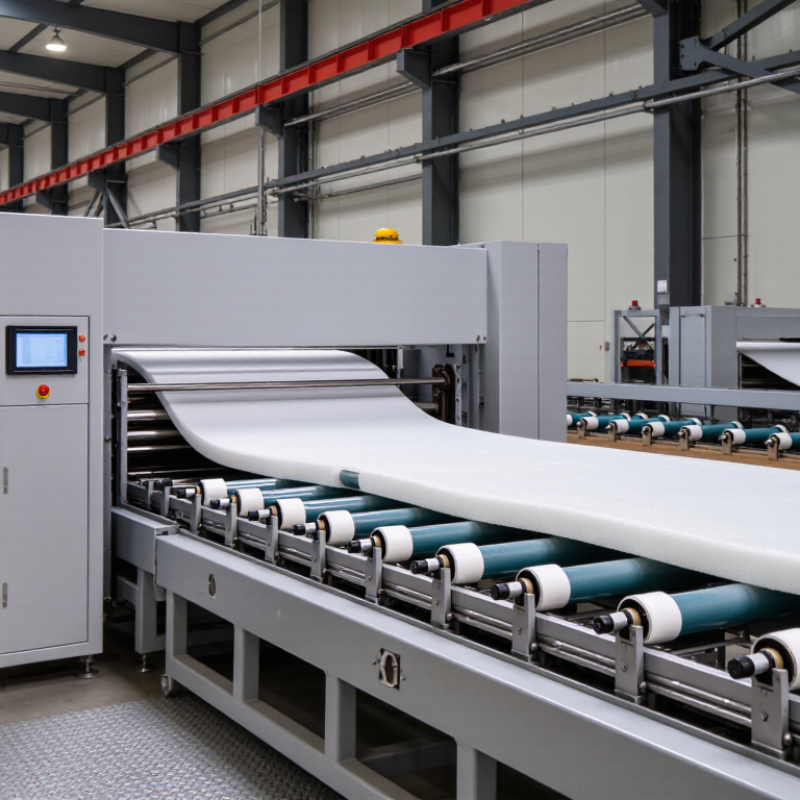
Understanding EPS sandwich panel forming machine basics is essential before comparing prices or automation levels. An EPS panel typically combines a lightweight expanded-polystyrene core with two facing sheets. The machine must control feeding, alignment, adhesive spreading, pressing, curing, and cutting. Small errors can create visible gaps along a 6-meter panel edge.
The International Energy Agency’s 2023 Global Status Report for Buildings and Construction states that buildings consumed about 30% of global final energy in 2022. This supports demand for better-insulated envelope systems.
EPS commonly offers thermal conductivity near 0.031–0.040 W/m·K, depending on density and testing conditions. Therefore, a suitable forming machine should maintain stable core density, panel thickness, and bonding pressure. Ask for measured tolerances, not attractive promises.
The best machine depends on output, panel dimensions, and material flow. Check whether its laminating section handles your steel, aluminum, or other facing materials without slipping. Review line speed under real production conditions, not only the maximum figure.
A 20-meter-per-minute claim may exclude cleaning, adjustments, and rejected panels. That matters. In practice, automatic cutting, accessible glue systems, and clear fault records reduce downtime.
Fortune Business Insights’ 2024 sandwich panel market report identifies continued global growth, but market growth does not guarantee easy operation. I would also inspect sample panels, measure flatness, and test bond strength after curing. A polished quotation can still hide maintenance work.
Choosing an EPS sandwich panel forming machine begins with your production requirements. Define the monthly output, panel width, thickness range, and core density. A machine for occasional orders may not suit continuous factory production. I have seen buyers focus on speed, then struggle with unstable feeding and frequent adjustments.
Panel specifications must guide the forming system. Confirm whether panels need flat, ribbed, or profiled surfaces. Check the required EPS thickness, usually measured across several product sizes. Verify facing materials, such as coated steel or aluminum, and their thickness. These details affect roller design, heating control, adhesive application, and cutting accuracy. A wider panel needs stronger alignment control. A thicker core may require a longer forming path.
Ask the supplier for measured tolerance data, not only catalog claims. Review line speed under your actual panel size and density. Request sample production using your EPS blocks and facing materials. Small differences in moisture, bead expansion, or surface flatness can change bonding results. Keep space for material storage and maintenance access. It is easy to underestimate this requirement. Energy consumption also deserves attention, especially during long shifts. A perfect calculation is rare. Leave room for future panel sizes, but avoid paying for capacity you will never use. Experienced operators should test changeover time, edge alignment, adhesive coverage, and cutting repeatability before approving the machine.
Select the machine according to the required panel thickness, EPS core density, and sustainable production speed. Thicker panels and higher-density cores generally require slower forming speeds to maintain bonding quality, dimensional accuracy, and surface finish.
Planning reference: typical EPS sandwich-panel requirements for continuous production. Final machine specifications should be verified against the selected panel length, effective width, adhesive system, and required daily output.
How to Choose the Best EPS Sandwich Panel Forming Machine
Machine type determines output, flexibility, and production risk. Continuous laminating lines commonly reach 3–15 metres per minute, depending on panel thickness and adhesive curing. They suit high-volume orders with stable specifications. Discontinuous press systems run more slowly, but they handle varied lengths and thicknesses with better flexibility. Roll-forming units also improve sheet accuracy, especially when profiles require tight dimensional control. In practice, speed alone is a poor buying criterion.
The International Energy Agency’s 2023 Global Status Report for Buildings and Construction states that buildings consume about 30% of global final energy. This increases demand for reliable insulated panels, not merely faster equipment. Check the machine’s foam-density range, panel thickness capability, heating-zone stability, and automatic length control. EPS cores often use densities around 15–25 kg/m³, while thermal conductivity commonly falls near 0.035–0.040 W/m·K. These values must be verified through testing, not marketing claims.
Technical performance deserves closer inspection. EN 14509 evaluates sandwich panels through thermal, mechanical, and fire-related performance requirements. Ask for line-speed records, thickness tolerance data, glue-consumption figures, and reject rates. Servo-controlled feeding can reduce alignment errors, but it cannot repair poor coil preparation. A faster line is not automatically better. That sounds obvious, yet it is often overlooked. I would also examine maintenance access and operator training, because one neglected sensor can stop an entire shift. Some specifications remain unclear. Independent factory trials are still safer than relying on brochures.
| Machine Type | Forming and Pressing Method | Typical Panel Profiles | Typical Production Performance | Common Panel Thickness | Common Working Width | Typical EPS Density Range | Automation Level | Main Advantages | Main Limitations | Recommended Application |
|---|---|---|---|---|---|---|---|---|---|---|
| Manual Discontinuous Press Line | Sheets are roll-formed separately, EPS is positioned manually, and the assembled panel is compressed in a hydraulic or mechanical press. | Flat panels, simple wall panels, and limited custom profiles. | Approximately 50–150 m² per shift, depending on panel length, crew size, and adhesive curing time. | 50–200 mm | 900–1,200 mm | 12–25 kg/m³, selected according to the required thermal and mechanical performance. | Low; requires manual loading, alignment, cutting, and unloading. | Low initial investment, flexible panel lengths, simple operation, and easy maintenance. | Lower output, greater dependence on operator skill, and less consistent adhesive distribution. | Small factories, regional production, trial production, and custom or low-volume orders. |
| Automatic Discontinuous Press Line | Automatic feeding, adhesive application, positioning, pressing, and cutting are performed in separate programmed cycles. | Flat wall panels, corrugated wall panels, and selected roof profiles. | Approximately 150–400 m² per shift, with cycle times commonly ranging from 3–8 minutes per panel. | 50–250 mm | 900–1,200 mm | 12–25 kg/m³ | Medium to high; PLC control and automatic sequencing are normally included. | Better dimensional consistency, reduced labor, adjustable panel lengths, and improved production repeatability. | Higher capital cost and intermittent production caused by pressing and curing cycles. | Small-to-medium manufacturers requiring consistent quality and moderate production volume. |
| Continuous EPS Sandwich Panel Line | Pre-profiled steel sheets, EPS core material, and adhesive pass continuously through alignment, pressing, laminating, and cutting sections. | Flat wall panels, ribbed wall panels, and selected roof or ceiling profiles. | Approximately 3–8 m/min in normal production; practical output depends on panel thickness, adhesive curing, and cutting length. | 50–250 mm | 900–1,200 mm | 12–25 kg/m³ | High; synchronized drives, PLC control, automatic length measurement, and automatic cutting are typical. | High throughput, stable panel dimensions, efficient material handling, and lower labor cost per square meter. | Higher installation cost, longer commissioning time, and less economical for frequent product changes. | Medium-to-large plants with stable orders and high-volume wall or roof panel production. |
| Continuous High-Speed Laminating Line | High-speed roll forming, controlled adhesive application, continuous core feeding, multi-zone pressing, and flying or synchronized cutting. | Standardized flat, micro-ribbed, and profiled panels with limited profile changes. | Approximately 8–15 m/min under suitable material, adhesive, and panel-thickness conditions. | 50–200 mm, depending on the press and core-feeding system. | 1,000–1,200 mm | 15–25 kg/m³, subject to the structural and thermal requirements of the panel system. | Very high; recipe management, automatic monitoring, synchronized motion control, and inline fault alarms are common. | Maximum productivity, consistent bonding pressure, reduced manual handling, and strong suitability for long production runs. | Highest investment and technical complexity; requires qualified operators, stable raw materials, and reliable maintenance support. | Large-scale production of standardized panels where high utilization and low unit cost are priorities. |
| Modular or Multi-Profile EPS Panel Line | Interchangeable forming cassettes, adjustable guides, or multiple roll-forming stations support different panel profiles. | Flat, ribbed, corrugated, and selected roof profiles, depending on the tooling package. | Approximately 3–10 m/min, with lower speed during profile changes or complex panel production. | 50–250 mm | 900–1,200 mm | 12–25 kg/m³ | Medium to high; profile recipes and setup parameters may be stored in the control system. | Good product flexibility, efficient use of one production line, and reduced need for separate machines. | Tooling changes increase setup time, and maximum speed may be lower than a dedicated single-profile line. | Manufacturers serving multiple construction markets or producing several standard panel designs. |
A reliable manufacturer should provide more than attractive machine photos. Examine the frame, roller alignment, welding quality, and temperature-control system. These details affect panel thickness, surface finish, and production stability. Ask for test samples using your actual EPS core and steel sheets. Measure them carefully. A showroom demonstration can hide weaknesses, so request continuous operation under realistic conditions. Check inspection records, electrical diagrams, operating manuals, and component traceability. Clear documentation signals professional engineering and easier maintenance.
Tips: Visit the factory if possible. Watch technicians assemble the machine. Ask how alignment is checked. Request references from recent buyers. Do not judge quality by price alone. I once overlooked spare-part availability, and the delay became expensive. That mistake still matters.
Safety requires practical evidence, not general promises. Look for guarded moving parts, emergency-stop buttons, electrical protection, and clear warning labels. The control system should prevent unsafe start-up after power loss. Ask whether operators receive training and whether maintenance procedures include isolation steps. After-sales support is equally important. Confirm warranty coverage, response times, remote troubleshooting, spare-part stock, and onsite service options. A dependable supplier should explain who handles technical problems after installation. Test their support before purchasing by sending detailed questions. Slow or vague replies may predict future frustration. Even a strong machine can fail commercially when support is weak.
Investment cost is more than the machine’s purchase price. I include installation, molds, training, freight, spare parts, and three months of working capital. For example, a $90,000 machine may require another $18,000 before production begins. A practical calculation uses usable output, not brochure speed. At 20 panels per hour, 65% utilization, eight hours daily, and 250 working days, annual output reaches about 26,000 panels. At a $4 contribution margin, this creates $104,000 before labor, energy, maintenance, and finance costs. My first estimate was too optimistic. Changeovers and material delays reduced real output by nearly 12%.
Investment cost is more than the machine’s purchase price.
Record cycle time, reject rate, kilowatt-hours per panel, and unplanned downtime for at least four weeks. A two-minute setup improvement can matter more than a higher theoretical speed. The UNEP/GlobalABC 2023 Global Status Report states that buildings consume roughly 30% of global energy and create about 26% of energy-related emissions. Therefore, consistent panel density and insulation performance support long-term customer value, not only factory productivity. Check foam thickness, bonding strength, cutting accuracy, and thermal conductivity. EN 14509 testing requirements can help verify finished panels. Lower waste also protects margins, although recycling arrangements and local energy prices may change the result. Select a machine with accessible service points, documented calibration procedures, standard components, and a realistic five-year maintenance budget. Reliability is proven on the factory floor.
Continuous laminating lines commonly produce 3–15 metres per minute. They suit large orders with stable panel specifications. Discontinuous presses run slower but handle varied lengths and thicknesses better. Speed is not everything.
Check the foam-density range, panel thickness limits, heating-zone stability, and automatic length control. Typical EPS density ranges from 15–25 kg/m³. Thermal conductivity often falls near 0.035–0.040 W/m·K. Verify these values through testing.
Higher speed may increase alignment problems, rejects, or maintenance pressure. Ask for speed records, thickness tolerances, glue consumption, and reject rates. A fast line can still produce inconsistent panels. That sounds obvious.
Request test samples using your actual EPS core and steel sheets. Measure thickness, surface finish, length, and alignment carefully. Ask for continuous operation under realistic conditions. A showroom trial may hide weaknesses.
Roll-forming units can improve sheet accuracy. They are useful when profiles require tight dimensional control. However, accurate rollers cannot correct poorly prepared steel coils. Check alignment during operation.
Look for guarded moving parts, emergency-stop buttons, electrical protection, and clear warning labels. The control system should prevent unsafe restarting after power loss. Maintenance procedures should include equipment isolation steps. Safety needs evidence.
Inspect the machine frame, roller alignment, welding quality, and temperature-control system. Request electrical diagrams, operating manuals, inspection records, and component traceability. Ask how technicians check alignment. Some specifications may remain unclear.
Confirm warranty coverage, response times, remote troubleshooting, spare-part stock, and onsite service options. Ask who handles technical problems after installation. Send detailed questions before purchasing and assess the replies. Slow answers are a warning.
One neglected sensor can stop an entire production shift. Easy maintenance access reduces inspection delays and troubleshooting difficulty. Confirm operator training and maintenance instructions. I once underestimated spare-part availability. That mistake still matters.
Visit if possible and observe technicians assembling the machine. Request references from recent buyers and watch realistic production tests. Independent factory trials are safer than relying only on brochures. Price alone proves little.
Choosing the right Eps Sandwich Panel Forming Machine requires a clear understanding of both your production goals and the machine’s operating principles. Start by defining the required panel thickness, width, core density, surface materials, output capacity, and level of automation. Then compare suitable machine types by examining forming accuracy, production speed, energy consumption, control systems, adjustment flexibility, and compatibility with different raw materials. A machine should not only meet current specifications but also support future product development and capacity expansion.
Manufacturer quality is equally important. Evaluate structural durability, component reliability, operating safety, installation guidance, training, spare-part availability, and after-sales technical support. Before making a decision, calculate the complete investment, including equipment, installation, labor, maintenance, energy use, and possible downtime. Comparing total ownership costs with expected productivity, product quality, and service life will help identify the best long-term value. The ideal Eps Sandwich Panel Forming Machine should provide stable performance, efficient operation, safe production, and dependable support throughout its working life.