Choosing a Polystyrene Composite Wall Machine is not just a purchase decision. It shapes how reliably a factory can produce panels, manage materials, and meet project specifications. Building-science expert Dr. Joseph Lstiburek is known for the warning, “Water is the enemy.” That reminder matters here: a machine can form wall components, but it cannot replace careful design, sound installation, or moisture control. Performance depends on the whole system.
A suitable machine should match the intended panel dimensions, production volume, and available floor space. Look closely at the mixing and feeding arrangements, cutting accuracy, control settings, and access for routine maintenance. Picture a production shift: operators load materials, monitor the line, and check finished panels for consistent dimensions. Small process variations can create rework. Details matter.
This guide examines practical reasons manufacturers consider this equipment, along with the trade-offs that deserve attention. Buyers should compare documented specifications, request a demonstration, and ask how the supplier handles training and service. A higher output claim means little if it does not fit the plant’s actual workflow. Not automatically. There is no universal machine for every operation; the right choice depends on materials, staffing, budget, and local production goals. A careful review helps separate useful capability from attractive but unverified promises.
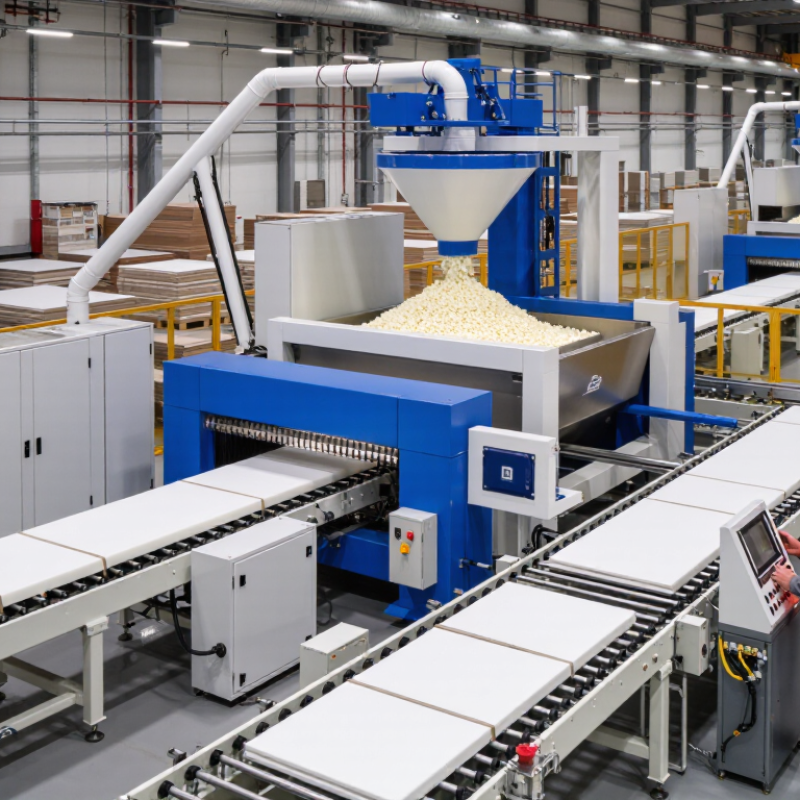
A polystyrene composite wall machine is equipment used to produce lightweight wall panels containing expanded polystyrene particles. Depending on the line design, it may mix cement-based materials, meter the foam particles, and shape the mixture inside a panel mold. Some systems also form surface layers or cut panels to set lengths. The exact process varies.
Think of the machine as a coordinated production line, not a single mixer. Material feeds, mixing speed, mold dimensions, and vibration can affect panel density and finish. Operators check fresh panels for uneven edges, visible voids, and consistent thickness. Small setup changes matter.
The panels are commonly used for interior partitions and other building applications where lower weight can ease handling. Their performance still depends on the formulation, curing conditions, and installation details. A machine cannot correct a poor mix by itself. That part is easy to overlook. Buyers should compare capacity, adjustment options, cleaning access, and the wall-panel specifications they need. Ask how the equipment handles changes in panel size. Real production is rarely as uniform as a brochure suggests, so trial runs and routine quality checks are worth planning.
A polystyrene composite wall machine manufactures lightweight wall panels by combining an expanded polystyrene (EPS) core with cement-based or other specified facing materials. Machine design, panel composition, and production capacity vary by configuration.
| Dimension | Details | Practical Consideration |
|---|---|---|
| Primary function | Forms composite wall panels by positioning an EPS core and applying or combining facing materials. | Confirm the machine supports the intended panel structure and production method. |
| Typical materials | EPS insulation core, cementitious slurry or mortar, and any reinforcement specified in the panel design. | Material proportions and reinforcement requirements should follow the approved panel design and applicable building requirements. |
| Common process stages | Material preparation, metering or mixing, core feeding, forming, panel cutting, and curing or handling. | Some stages may be manual, semi-automatic, or automated depending on the machine configuration. |
| Panel dimensions | Thickness, length, and width depend on the machine’s forming system and the selected panel design. | Check the required finished dimensions, cutting method, and adjustment range before selecting equipment. |
| Potential benefits | Can support repeatable panel production and combine a lightweight core with rigid facing layers. | Actual productivity and panel properties depend on materials, process control, curing, and operator practice. |
| Building applications | Panels may be used for interior partitions or other wall applications when designed and approved for that use. | Suitability for structural, fire-rated, or exterior use must be verified against project specifications and local codes. |
| Quality checks | Typical checks include dimensions, surface condition, panel integrity, and consistency of the core and facings. | Use documented inspection procedures and relevant test methods for the intended market. |
| Site and utility needs | Installation may require adequate floor space, electrical supply, material storage, and handling equipment. | Confirm utility requirements, layout, ventilation, and safe material-handling arrangements with the equipment supplier. |
| Choosing a machine | Compare compatible panel designs, production workflow, adjustment options, maintenance access, and operator requirements. | Request documented specifications and verify them against the planned materials, output needs, and local standards. |
Panels commonly combine expanded polystyrene beads, cement, water, and sand or fly ash. Some mixes include mineral fillers, additives, or fiberglass mesh. Recipes vary.
Measured ingredients are mixed and fed into a mold or forming line. Facing layers enclose the polystyrene core. Pressure or vibration may help reduce gaps.
Moisture changes can affect the panel finish and consistency. Operators also check feed rates, mold alignment, and material distribution. Small adjustments matter.
Panels are set or cured before removal. Workers check dimensions, surfaces, and edges for visible defects. Some panels will need closer inspection.
A typical setup may include hoppers, weighing equipment, a mixer, and a molding unit. Curing areas and cutting equipment may also be part of the process.
Start with the required panel thickness, dimensions, and daily output. Ask for a production trial using your actual materials. A showroom sample may not tell the whole story.
Request measured output, reject rates, and dimensional tolerances from a sustained trial. Check how easily operators change panel sizes. Advertised speed alone is not enough.
Review power needs, floor space, dust control, guarding, spare parts, and maintenance access. Ask about routine service and realistic downtime. Details can bite.
A Polystyrene Composite Wall Machine is designed to manufacture lightweight wall panels by combining polystyrene cores with facing materials such as cement-based boards or other suitable layers. The production process typically involves preparing and feeding the materials, forming the panel, and allowing it to set or finish before it is cut to the required size. Machine configuration and operating steps can vary according to the panel design and production needs.
These machines can support consistent panel dimensions, efficient material use, and a steady manufacturing workflow. Before choosing one, buyers should consider the types and sizes of panels they plan to produce, the machine’s capacity, the materials it can handle, available workspace, operating requirements, maintenance needs, and expected production volume. Comparing these factors helps ensure that the equipment suits both current manufacturing goals and future plans.