Choosing the best Roofing Panel Forming Machine in China requires more than comparing catalog prices. The right choice depends on panel profiles, steel thickness, production speed, and local service support. A machine may look impressive in a showroom, yet perform poorly with thin galvanized steel. That gap matters.
Roll-forming specialist Chuck Herring often emphasizes, “The quality of the finished product begins with the quality of the tooling.” This principle remains highly practical. Forming rollers must be accurately machined and aligned. Otherwise, small profile errors can appear along a six-meter panel. Experienced buyers should inspect sample panels, not only machine photographs. They should also review motor brands, control systems, spare-part availability, and commissioning procedures.
A reliable Chinese supplier should explain its tolerances clearly. It should provide drawings before production begins. Factory testing is important. So is watching the machine produce actual roofing panels under realistic conditions. Ask about coil widths, hydraulic cutting accuracy, decoiler capacity, and changeover time. These details reveal real manufacturing experience.
No machine is perfect. That is worth remembering. Some buyers focus too heavily on speed and forget maintenance access. Others choose the lowest quotation and later face expensive downtime. My own evaluation would include production records, operator feedback, and after-sales response time. A dependable Roofing Panel Forming Machine should create consistent panels, reduce adjustment work, and remain practical for years. The best option is not always the fastest or cheapest. It is the machine that fits your materials, workforce, and long-term production goals.
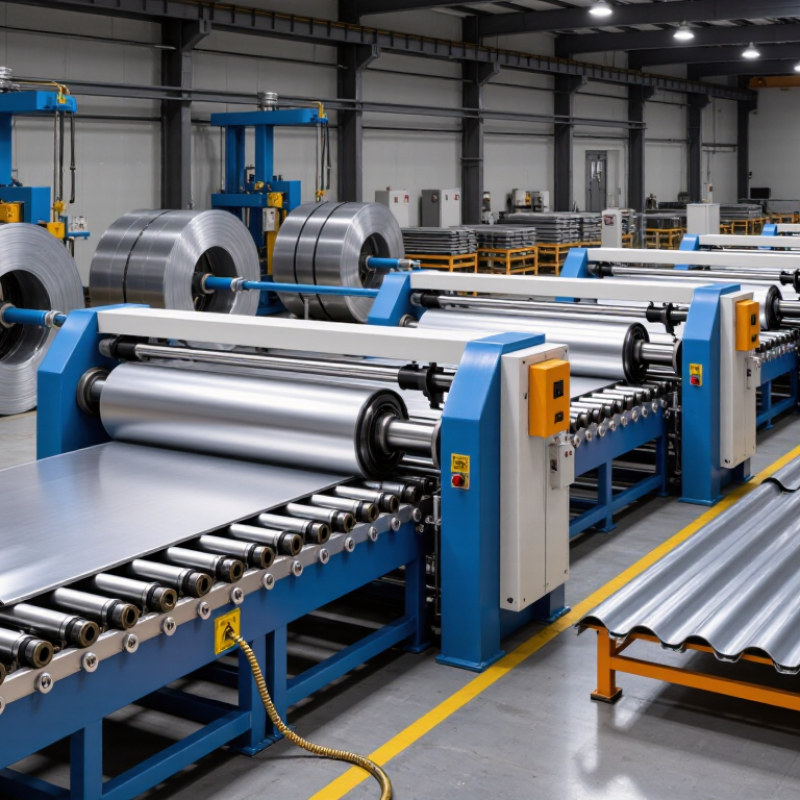
A roofing panel forming machine is an industrial line that turns flat metal coils into finished roof panels. It usually includes a decoiler, guide rollers, forming stations, cutting equipment, and a control system. The rollers gradually shape steel or aluminum without heating the sheet. This controlled process keeps the panel profile consistent from one end to another.
In practical production, operators load a coil, set the panel length, and adjust the forming speed. The line then feeds, bends, cuts, and releases each panel. Common profiles include corrugated, trapezoidal, and tile-shaped designs. Material thickness, coil width, coating, and rib height must match the roller design. A mismatch can cause scratches, uneven edges, or weak overlaps. Small details matter here.
Selecting the best machine in China requires more than comparing prices. Check the frame stiffness, roller material, cutting accuracy, electrical protection, and available technical support. Ask for test samples using your actual coil specifications. I have seen attractive machines perform poorly after rushed commissioning. That experience still influences my inspections. A clean panel is not enough. Measure its width, diagonal, rib spacing, and cut length. Also examine maintenance access, spare parts, noise, and operator safety. A reliable machine should be understandable, serviceable, and stable during long production shifts.
A roofing panel forming machine turns flat steel coils into precise, interlocking sheets through a controlled sequence. The process starts with a decoiler, which feeds the coil into leveling rollers. Guide rollers then center the strip before forming stations gradually create ribs, corrugations, or tile profiles. Each station bends the metal slightly. That matters.
A programmable cutter stops the strip at the required length without stopping the entire line. Operators usually check coil width, thickness, hardness, and roller alignment before production. Small errors multiply. A 0.5-millimeter guide deviation can produce visible edge distortion across long panels. Practical inspection should include panel width, rib height, cut squareness, and coating damage. The machine also needs stable speed control and emergency protection.
According to Grand View Research, the global roofing materials market was valued at more than 140 billion dollars in 2023, with continued growth expected through the decade. This demand increases pressure for consistent, high-volume forming. A separate report from MarketsandMarkets identifies automation and digital control as major influences on modern metal-forming equipment. However, report forecasts are not shop-floor guarantees. They may overlook maintenance quality, operator training, and local steel variation. In my experience, the best-performing line is not always the fastest one. It is the machine that holds profile accuracy after hours of production, while consuming reasonable power and allowing quick roller adjustment. The difficult part is often calibration, not forming.
Roofing panel forming machines typically deco il, level, and guide a steel or aluminum coil through a series of rollers. Each roller station progressively shapes the profile before an automatic cutting unit produces panels at the required length.
The chart shows typical production-speed ranges for common roofing panel profiles. Actual speed depends on material thickness, profile depth, panel length, number of forming stations, and cutting method. More complex profiles generally run slower because they require more controlled forming.
The best roofing panel forming machine should match your material, panel profile, and production volume. China-made machines often support galvanized steel, pre-painted steel, and aluminum coils. A practical model usually includes an adjustable decoiler, guide rollers, forming stations, and an automatic cutting unit. These parts must work smoothly together.
Precision matters. Look for a rigid welded frame, hardened rollers, and stable hydraulic cutting. A reliable machine should keep panel length errors within a small tolerance during continuous production. Many systems use PLC controls and touchscreen operation. That reduces manual adjustment and helps operators monitor speed, count, and faults.
Keep it simple.
Safety features deserve close attention. Emergency stops, protective covers, overload protection, and clear wiring improve daily operation.
Before purchasing, request trial-forming videos and material samples. Check the panel surface for scratches, edge waves, and uneven ribs. A higher line speed is not always better. Poor alignment can create expensive waste.
After-sales support also affects real value. Confirm spare-part availability, installation guidance, electrical standards, and response times. A machine may look impressive in a showroom but perform differently under long production hours. Ask about testing with your actual coil thickness.
No machine is perfect. Careful verification still prevents many problems.
Choosing the best roofing panel forming machine in China requires more than comparing prices. A reliable supplier should explain forming speed, panel thickness, material yield, and maintenance access. During factory visits, inspect the decoiler, forming rollers, cutting unit, and control cabinet closely. Ask to see a machine running your actual coil material. Steel can look identical but behave differently under pressure. This practical test often reveals vibration, uneven feeding, or rough panel edges. I have found that polished brochures rarely show these details. Good lesson.
Compare at least three suppliers using the same technical specification sheet. Check frame construction, roller hardness, motor capacity, tolerance records, and electrical components. Request videos, test reports, installation procedures, and references from comparable roofing projects. A serious manufacturer should provide clear answers, not vague promises. Ask how quickly replacement parts can arrive and who handles remote troubleshooting. Warranty length matters, but response time matters more. Sometimes the cheapest quotation hides thinner frames or limited commissioning support. That mistake can cost weeks of production. Still, expensive equipment is not automatically better.
Evaluate engineering communication before signing anything. Can the supplier understand your target profile, local voltage, workspace limits, and expected daily output? Confirm delivery terms, operator training, spare-part lists, and acceptance standards in writing. Visit the workshop if possible. Look for organized assembly areas, measurement tools, weld quality, and realistic quality records. One concern remains: online demonstrations may be carefully selected. My own comparisons have not always been perfect. Insist on an independent inspection or live trial, then record every promise in the purchase agreement.
| Comparison Dimension | Entry-Level Configuration | Standard Industrial Configuration | High-Output Configuration | Recommended Evaluation Point |
|---|---|---|---|---|
| Suitable Application | Small roofing projects and occasional production | Regular commercial and residential production | Large-volume manufacturing and multi-shift operation | Match the machine to monthly demand rather than maximum advertised speed |
| Typical Roofing Profiles | Corrugated or single standard trapezoidal profile | Corrugated, trapezoidal, or tile-effect profile | Multiple dedicated profiles with separate tooling | Confirm profile drawing, pitch, height, effective cover width, and tolerances before quotation |
| Compatible Coil Material | Pre-painted steel, galvanized steel, or galvalume steel | Pre-painted, galvanized, galvalume, and aluminum where specified | Several materials with dedicated setup parameters | Verify material grade, yield strength, coating, width, and thickness range |
| Common Thickness Range | Approximately 0.30–0.80 mm | Approximately 0.30–1.00 mm | Approximately 0.40–1.20 mm, subject to profile design | Do not compare thickness claims without checking roll diameter, shaft size, and material strength |
| Effective Forming Speed | About 8–12 m/min | About 12–20 m/min | About 20–30 m/min for suitable profiles and materials | Request demonstrated production speed including punching, cutting, and acceleration time |
| Cutting Method | Hydraulic or mechanical stop-to-cut system | Hydraulic or flying-cut system, depending on specification | High-speed flying cut with synchronized control | Check cut-length tolerance, burr formation, blade material, and replacement cost |
| Length Accuracy | Typically around ±1–3 mm, depending on length | Typically around ±1–2 mm under stable operating conditions | Typically around ±1 mm when properly calibrated | Require a written tolerance and a test sample made from the buyer’s coil |
| Roll-Forming Stations | Usually about 12–16 stations | Usually about 16–20 stations | Often about 20–28 stations for deeper or more complex profiles | More stations are not automatically better; review forming quality and stress distribution |
| Control System | PLC, touchscreen, encoder, and basic recipe storage | PLC, touchscreen, encoder, automatic length control, and fault display | Integrated line control, diagnostics, recipe management, and production monitoring | Confirm controller model, language options, backup method, and remote troubleshooting capability |
| Changeover Time | Manual adjustment; commonly 30–90 minutes | Typically 20–60 minutes for compatible settings | About 10–30 minutes with stored recipes and optimized tooling | Calculate lost production time and tooling cost for every additional profile |
| Electrical Requirements | Commonly 380 V, 50 Hz, three-phase; alternatives may be available | Commonly 380 V, 50 Hz, three-phase | Usually 380 V, 50 Hz, three-phase with higher connected load | Confirm local voltage, frequency, total power, motor protection, and wiring standards |
| Quality Documentation | Basic drawings, manuals, and commissioning checklist | Technical drawings, manuals, inspection records, and spare-parts list | Full document package, inspection plan, electrical diagrams, and maintenance schedule | Ask for material certificates, dimensional inspection records, and electrical documentation |
| Compliance Evidence | Declaration and basic safety documentation where required | Safety guards, emergency stops, electrical protection, and applicable conformity documents | Expanded risk assessment, conformity documentation, and factory acceptance testing | Check requirements for the destination market instead of relying only on a certificate label |
| Warranty Benchmark | Commonly 12 months from installation or shipment terms | Commonly 12 months, with exclusions for wear parts | Often 12–24 months, subject to contract and commissioning conditions | Clarify response time, covered components, labor, travel, and wear-part exclusions |
| After-Sales Support | Remote video guidance and basic manuals | Remote commissioning, operating training, and spare-parts support | Remote diagnostics, on-site service options, training, and preventive-maintenance support | Request named service contacts, spare-parts lead times, and customer references |
| Best Value Indicator | Low initial investment and simple operation | Balanced productivity, flexibility, maintenance, and purchase cost | Lowest cost per finished meter at sustained high utilization | Compare total cost of ownership, not only the machine purchase price |
Choosing the best roofing panel forming machine starts with your production sheet, not a supplier’s catalogue. Define monthly tonnage, coil width, thickness, yield strength, panel length, profile depth, and required tolerance. World Steel Association’s World Steel in Figures 2024 reports 1.89 billion tonnes of crude steel production in 2023. That scale hides variation. One coil may run smoothly, while another causes edge wave or springback. Confirm the machine’s tested range using your actual material. Ask for sample panels, measured at the ribs and overlaps. Small errors become visible on a long roof.
For a mixed-order factory, prioritize quick profile changeover, stable servo feeding, and repeatable cutting. A practical trial should run your narrowest and thickest coils, including painted or galvanized surfaces. Record line speed, scrap percentage, noise, setup minutes, and panel squareness. ISO 22400-2 provides a recognized framework for tracking manufacturing performance indicators, including availability, performance, and quality. Do not judge speed alone. A fast line with frequent stoppages is expensive. Check decoiler capacity, roll-tooling hardness, guarding, emergency stops, spare-part lead times, and technician response. I would not pretend every quoted tolerance survives real production. Climate, coil quality, and operator skill interfere. Leave margin. Require documented factory testing and service terms before payment, then calculate output from your slowest realistic job, not the showroom sample.
A decoiler feeds the coil through leveling and guide rollers. Forming stations bend the strip gradually into ribs, corrugations, or tile shapes. Each station makes a small change. A cutter then produces panels at the required length.
Common materials include galvanized steel, pre-painted steel, and aluminum coils. Check thickness, width, hardness, and yield strength before production. One machine may handle several materials, but not every combination reliably. Test your actual coils.
Look for a rigid frame, hardened rollers, adjustable guides, and stable cutting. PLC controls can display speed, faults, and production counts. Protective covers and emergency stops support safer operation. Keep the control system simple.
Measure panel width, rib height, length, and cut squareness. Inspect edges for waves and surfaces for scratches. Check the overlap area carefully. Small defects become obvious on long roof panels.
Misalignment can distort panel edges across the full length. Even a 0.5-millimeter guide error may create visible bending. Check alignment before forming begins and after long production runs. Tiny errors multiply.
Define monthly tonnage, coil width, thickness, profile depth, and panel length. Include your narrowest and thickest coils in testing. Ask for measured samples from your materials. Do not rely on showroom speed alone.
Not necessarily. A fast line may create more scrap or frequent stoppages. Stable accuracy after several hours often matters more than maximum speed. I would calculate output from the slowest realistic job.
Request trial-forming videos, sample panels, and documented factory testing. Confirm spare-part availability, installation guidance, electrical compatibility, and service response times. Review decoiler capacity, guarding, cutting accuracy, and roller durability. No machine is perfect. Leave some tolerance.
Choosing the best Roofing Panel Forming Machine in China requires a clear understanding of your production goals, material requirements, and expected output. These machines are designed to transform metal coils into durable roofing panels through a series of precise forming, cutting, and control processes. Modern China-made roofing panel machines often feature adjustable forming systems, automated length control, strong structural frames, efficient hydraulic cutting, and user-friendly control panels. Their performance depends on forming accuracy, operating speed, material compatibility, maintenance needs, and overall production stability.
When comparing Chinese suppliers, buyers should evaluate machine specifications, manufacturing quality, technical support, customization options, delivery capability, and long-term operating costs rather than focusing only on the initial price. The best machine for your business should match the required panel profile, material thickness, production volume, available workspace, and skill level of your operators. A careful comparison of these factors will help ensure reliable performance, consistent panel quality, and better value throughout the machine’s service life.